
By : Studio Anne Holtrop
For millennia, pearling and its associated trades shaped the economy and culture of Bahrain’s island society. As a centre for pearling, Bahrain was the regional economic hub where pearl divers and other crew from across the Gulf arrived to test their fate on board the dhows. The outcome of the pearling season provided a livelihood for many local residents and their trades, amongst them: merchants, creditors, boat owners and makers, captains, divers, haulers, and sail-makers.
The spatial and architectural testimony of the pearling economy in Muharraq and the northern waters of Bahrain are the last remaining, and therefore outstanding, examples that represent the complete narrative of the cultural tradition of pearling.
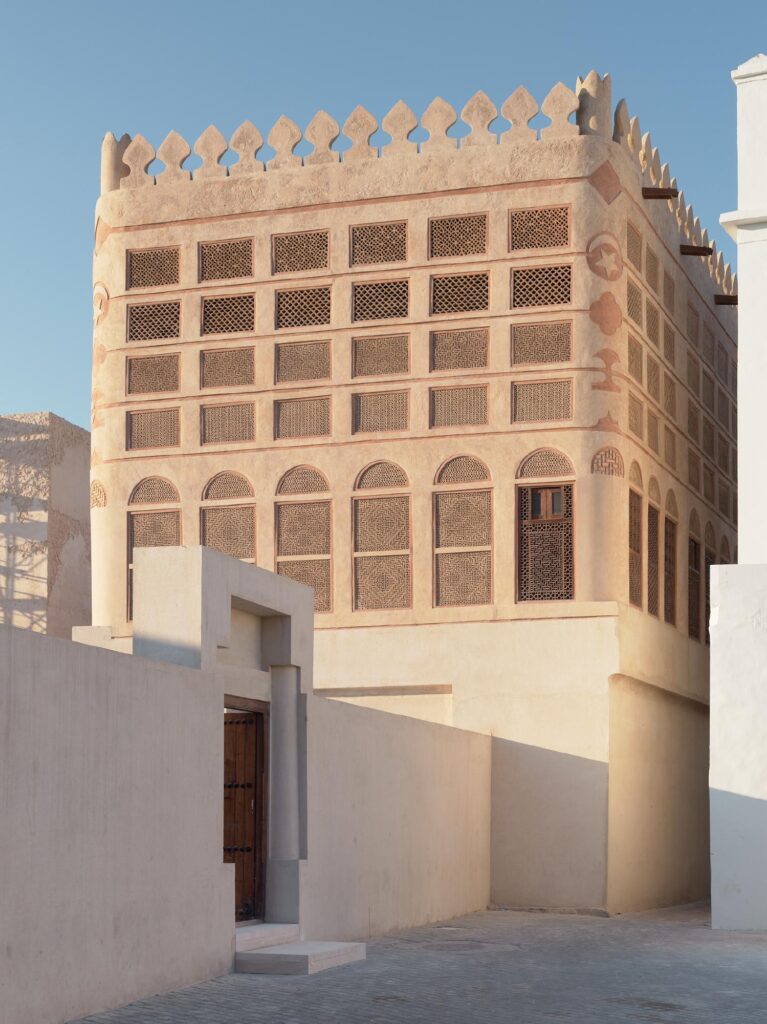
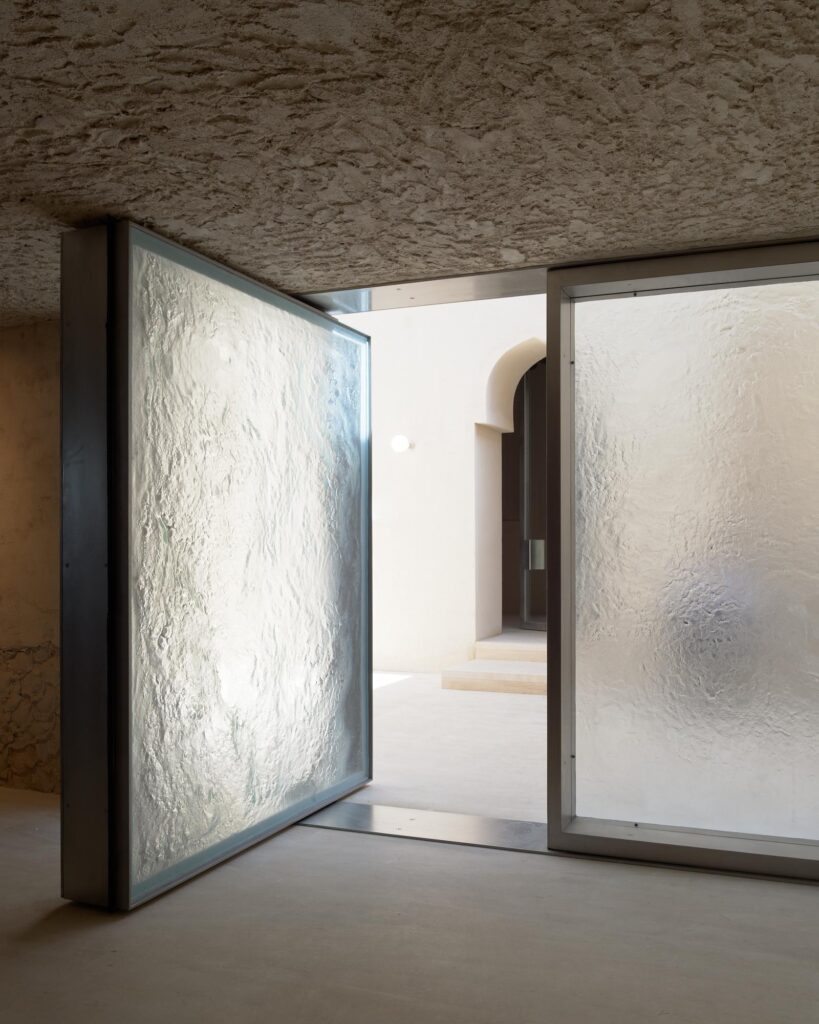
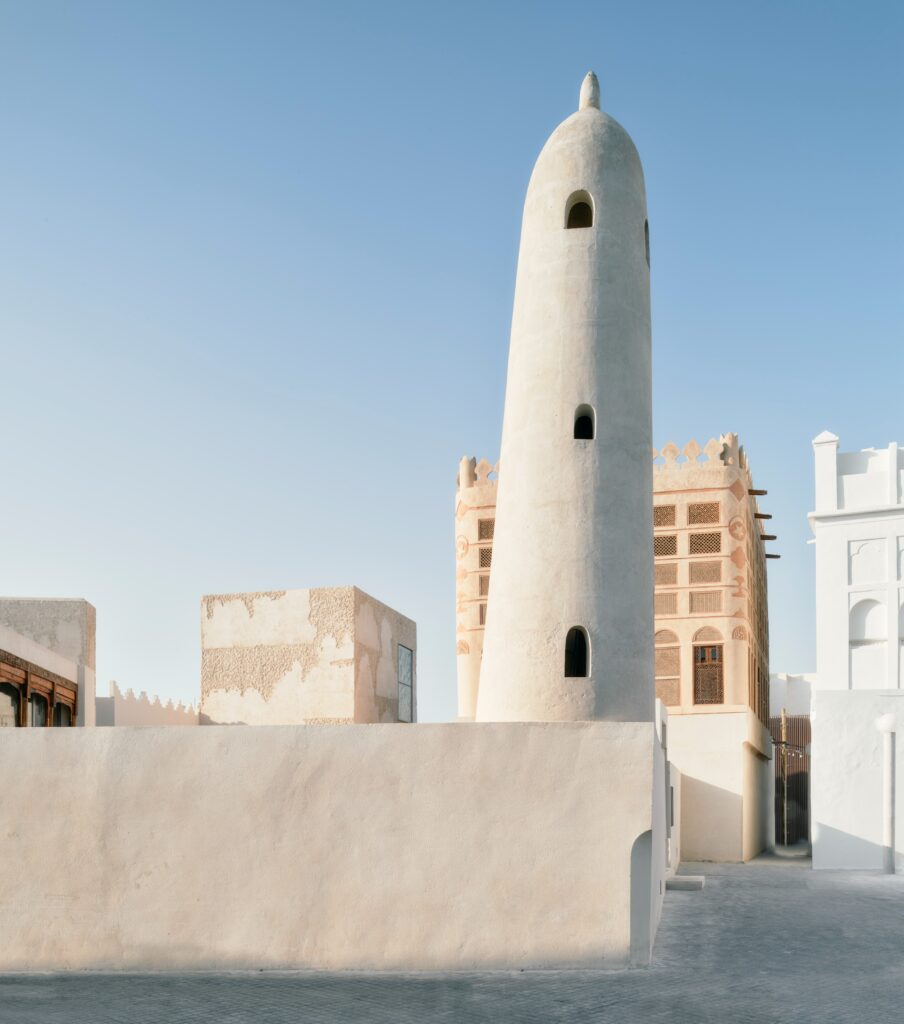
Amongst the iconic structures, the Siyadi and Murad clusters are essential components of the Pearling Path, since both families were highly involved as Pearl Merchants. The Siyadi Majlis is an architecturally unique example of a majlis in which Tajir Al-Lulu received pearl buyers from as far as India and Europe. Siyadi Majlis was the scene of negotiations over special pearl collections.
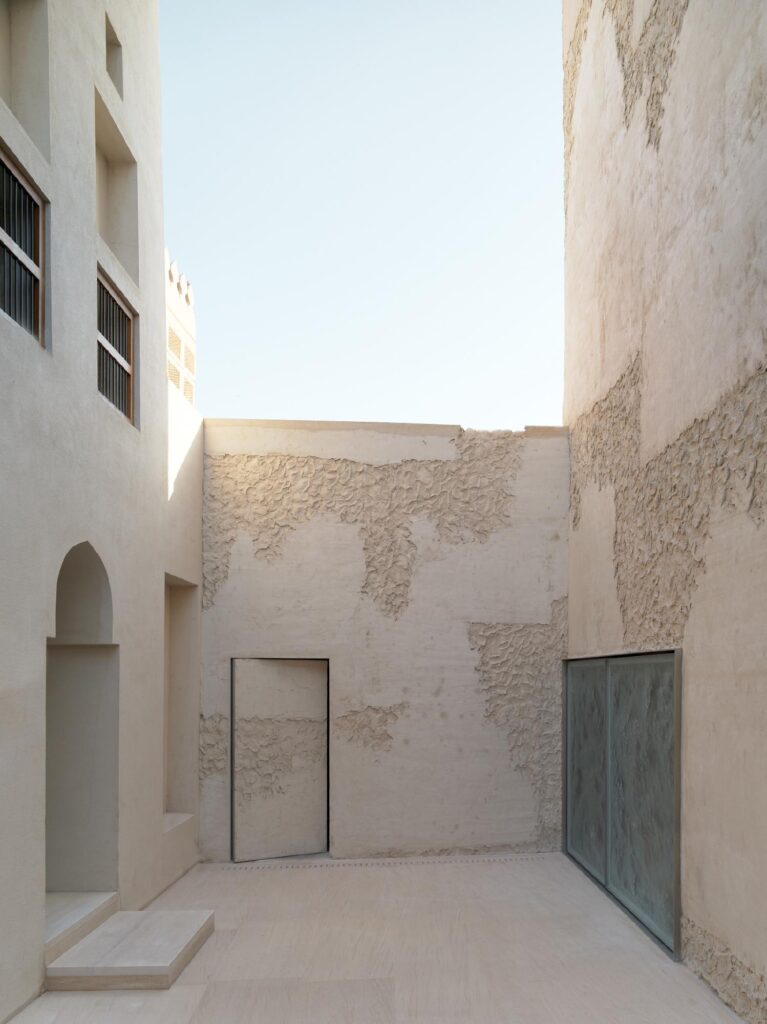
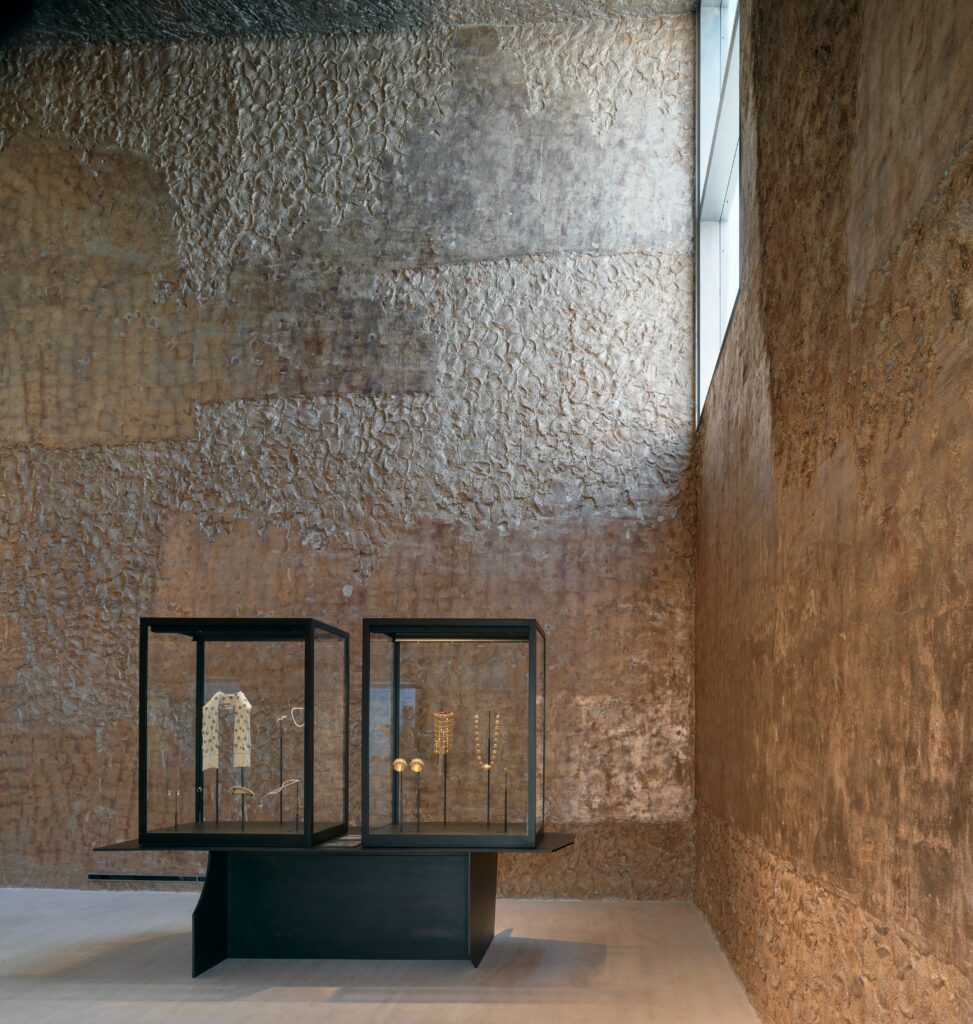
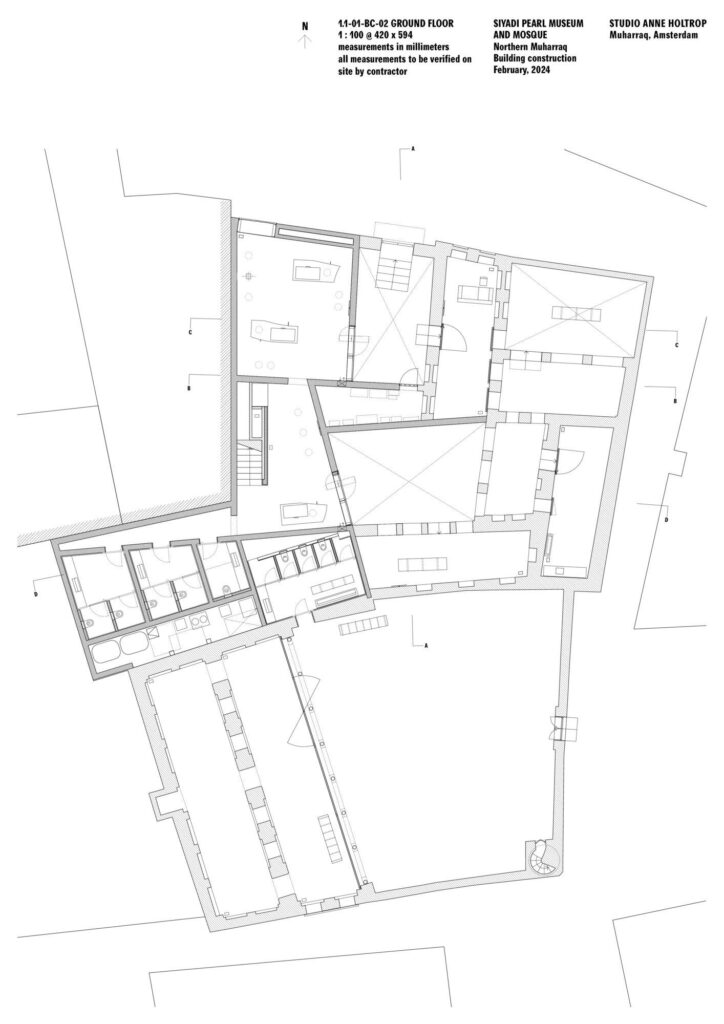
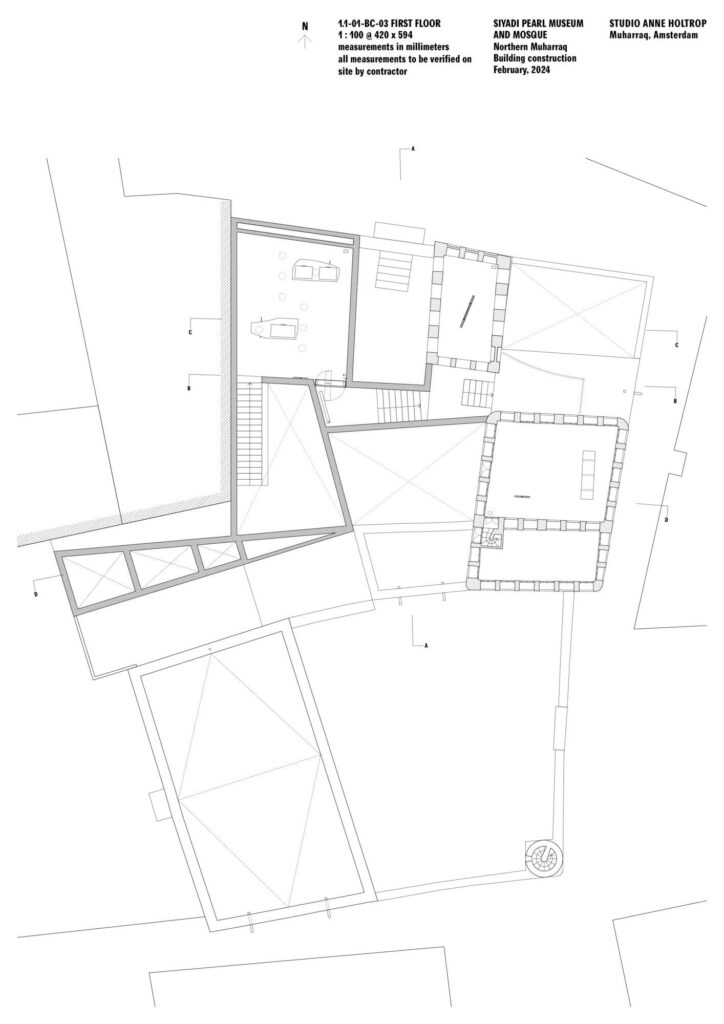
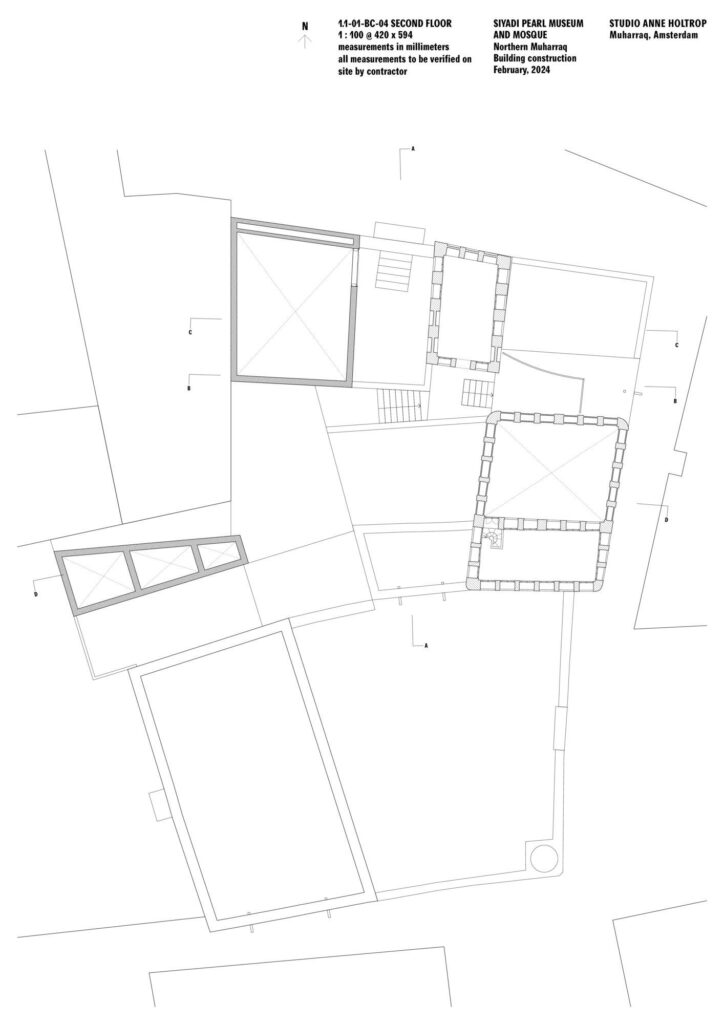
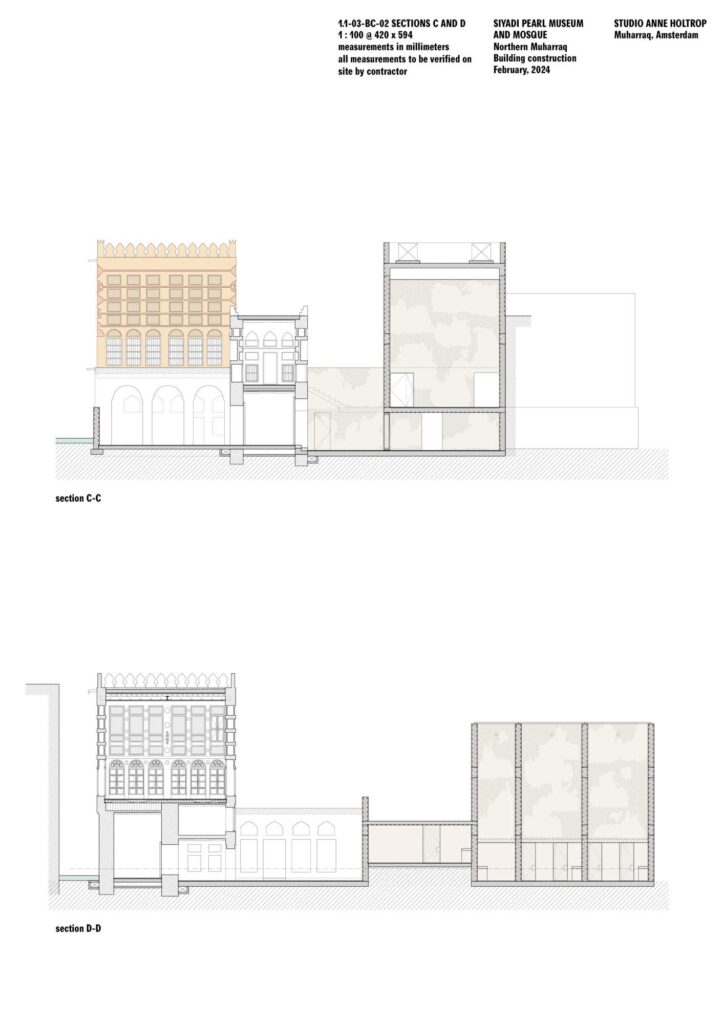
The first step of the renovation of the Siyadi Majlis and the Mosque is the removal of the incompatible additions and modifications that have been built over time. Stripped down to the remaining historic elements, the missing parts of the building are added by extending the existing walls and their directions, more or less based on found historic foundations. The newly made rooms will be used for exhibiting pearl jewelry and loose pearls from the collections of the Bahrain National Museum, Mattar Jewelers, and Cartier Collection.
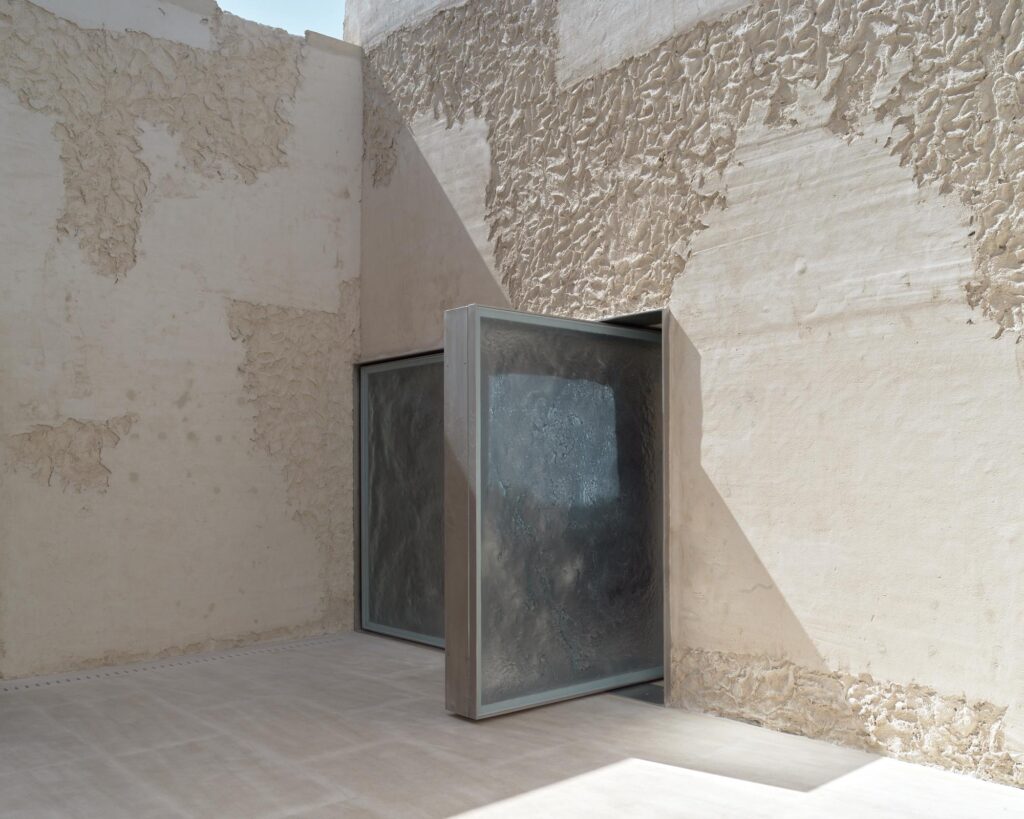
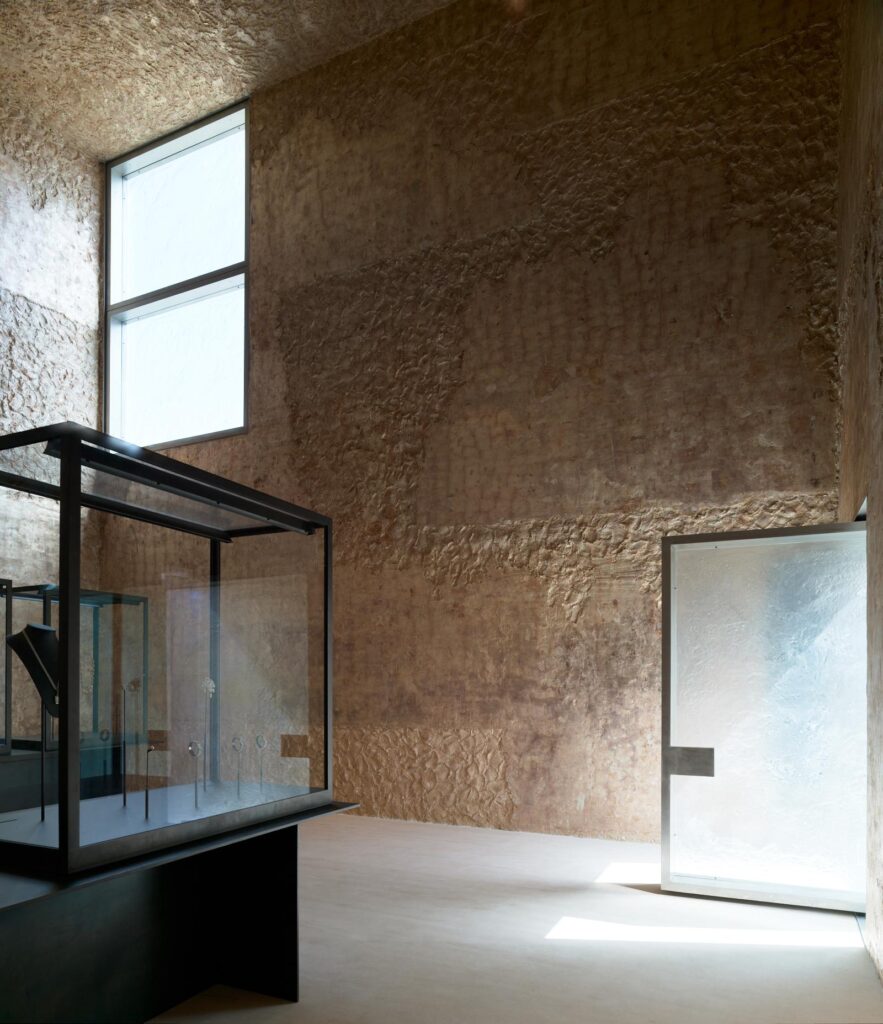
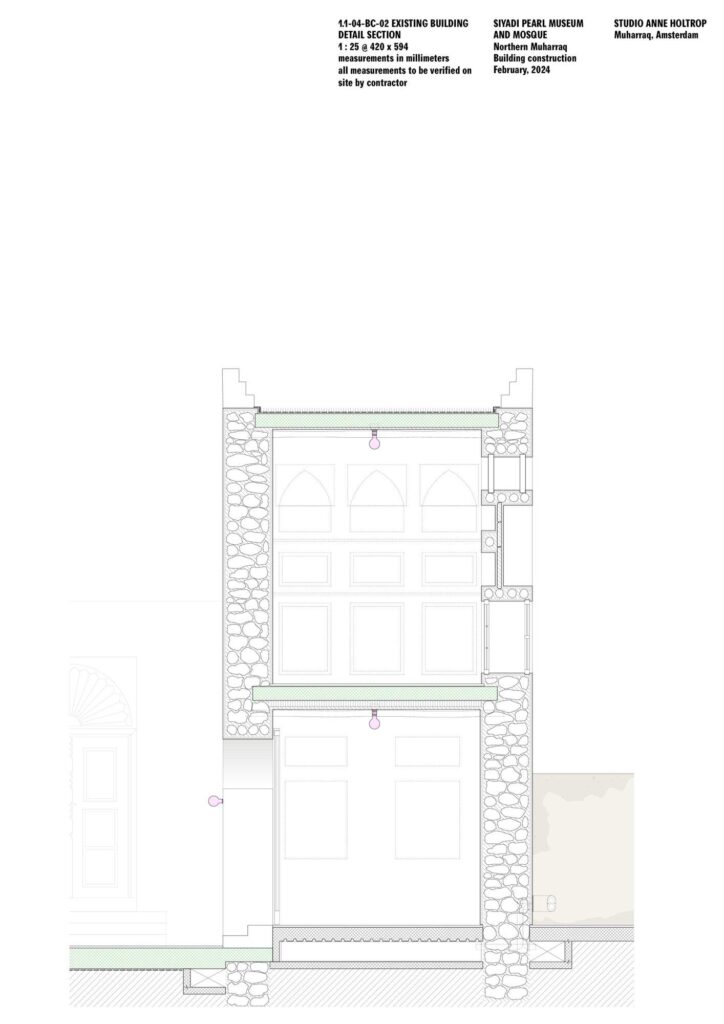
The historic construction material is coral stone (froush), finished fully with a lime-based plaster. The historic plaster is built in two layers: a first thick layer of plaster is thrown by hand on the coral stone wall construction, and after a fine smooth layer is applied as a wall finish. Often, this final layer has carved gypsum and lime reliefs and painted decorations. The impressive guestroom of Siyadi Majlis features outstanding decorative motifs that can’t be seen anywhere else in Muharraq.
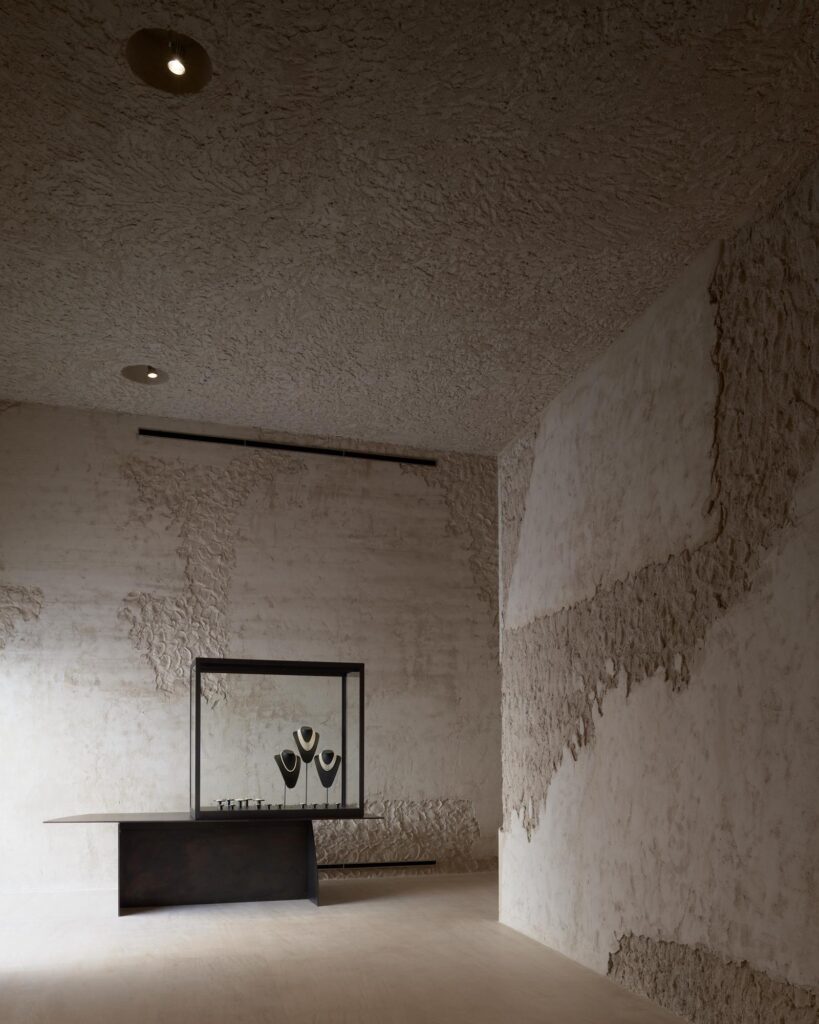
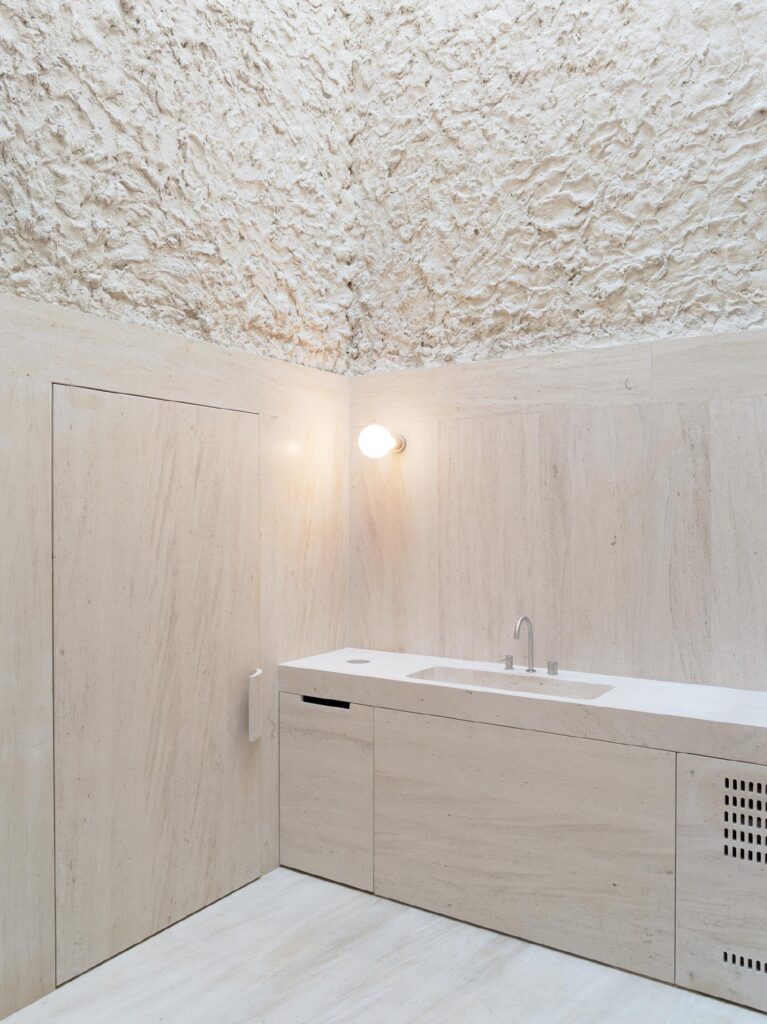
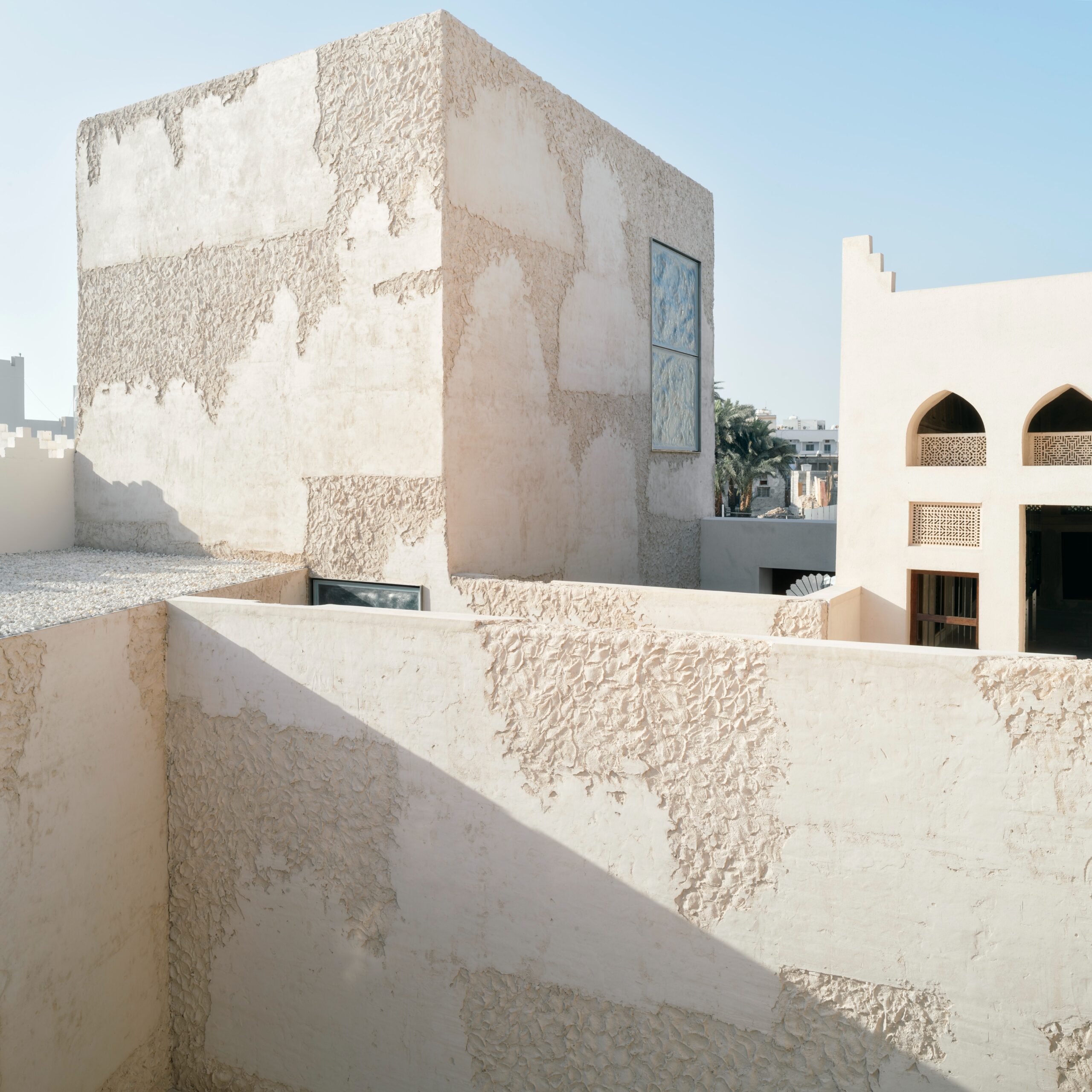
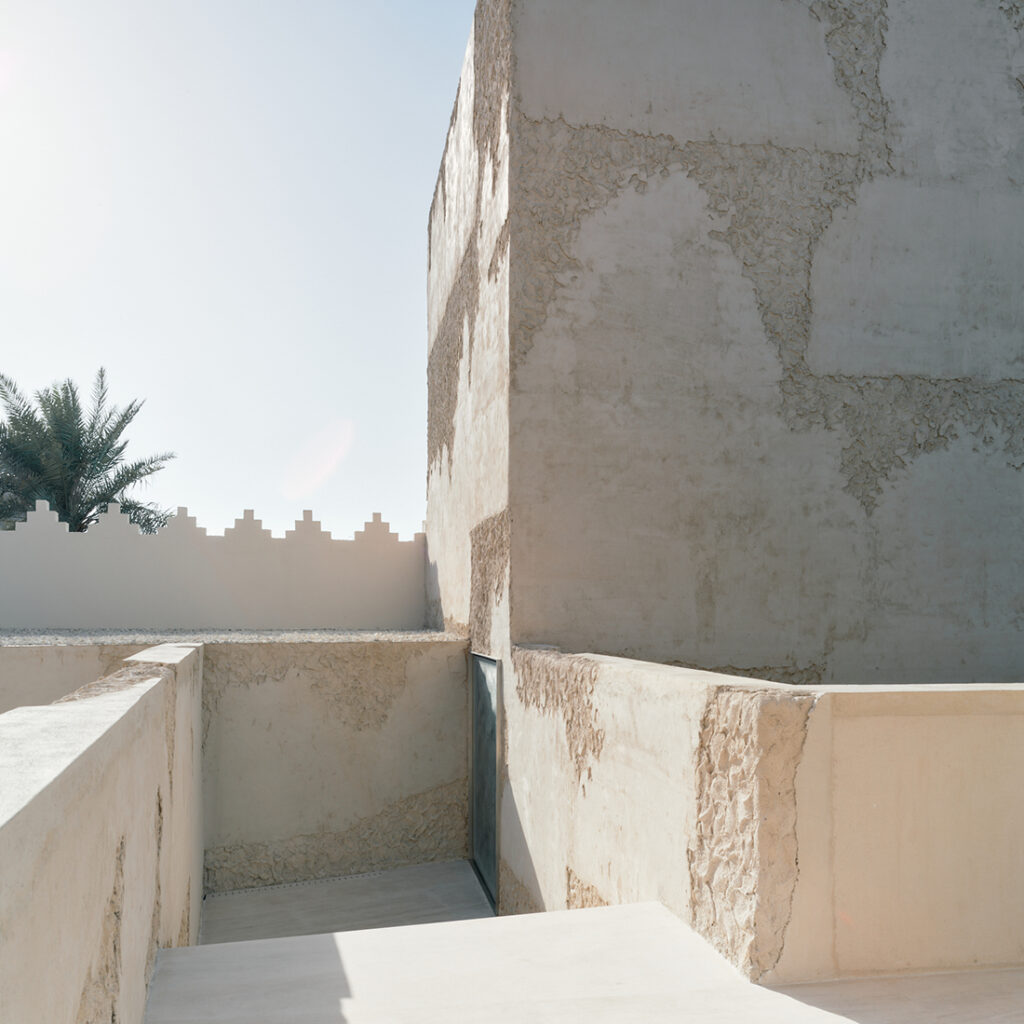
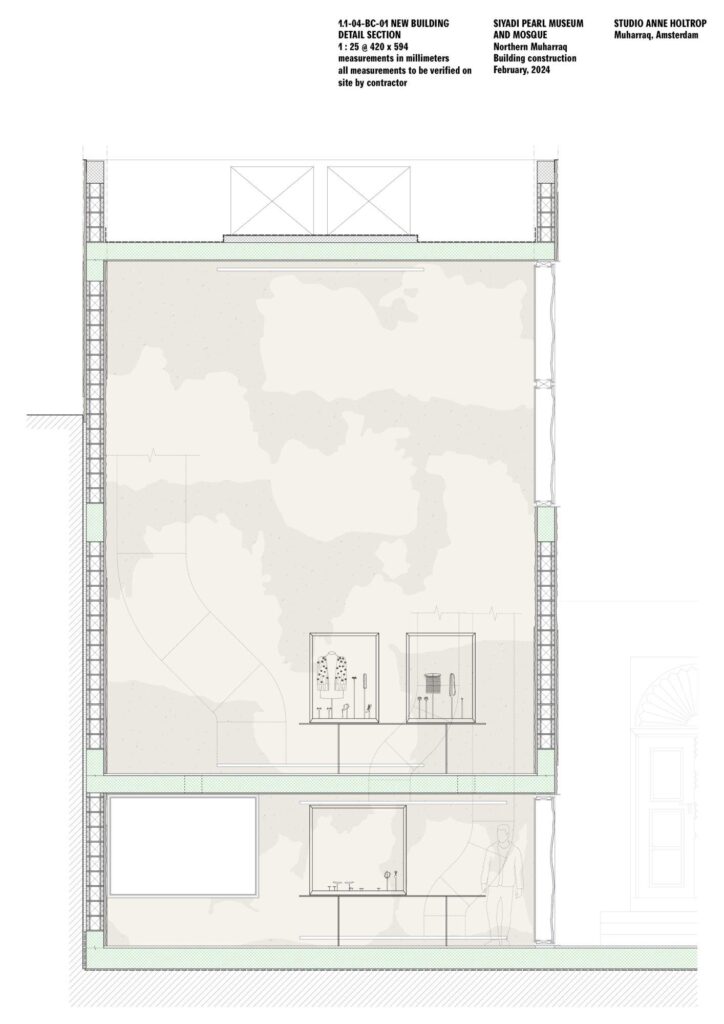
To distinguish the new walls of the Siyadi Pearl Museum and Mosque, we invented a new plastering technique, where both layers of the plaster remain visible. After the first rough layer, a smooth layer of around 2.5 meters in width is partially smeared over the surface from bottom to top, resulting in large surfaces with irregular boundaries and a smooth top surface. In this way, a new, distinctive technique for plastering is proposed, while maintaining the intrinsic plaster characteristic of the past.
Architecture : Studio Anne Holtrop; Anne Holtrop
Client : Bahrain Authority for Culture and Antiquities
Year of completion : 2024
Location : Muharraq, Bahrain
Total area : 1.500 m2
Site area : 1.100 m2
Photos : Anne Holtrop
