
By Aura Architecture Studio
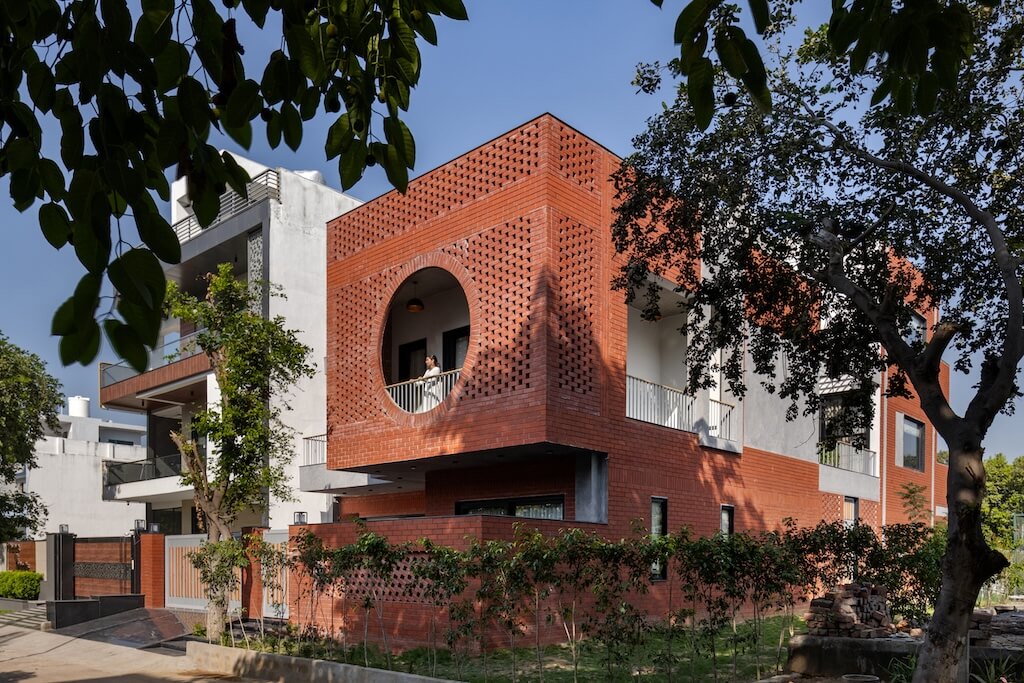
A west-facing residence in Rohtak, Haryana, meets the needs of climate, privacy, and material longevity with a careful arrangement of brick, apertures, and managed illumination.In the agricultural plains of Rohtak, Haryana, one’s sense of belonging is achieved through material wealth, balance, and a subtle unwillingness to dominate. The Red Brick House, a 5,200-square-foot home on a westward-facing lot, is constructed based on exactly that idea.
In a terrain sculpted by dust, heat, and seasonal variations, brick stands as the sole genuine solution: sturdy, nearly self-sustaining, and so inherently linked to this earth that it feels more like destiny than choice.Constructing with fired clay anchors the residence in a local heritage of thermal-mass building, where the wall acts not as a divider but as a climatic tool, capturing heat in the daytime and slowly emitting it throughout the night. There is no decorative embellishment. The design establishes its significance through genuine use of materials.
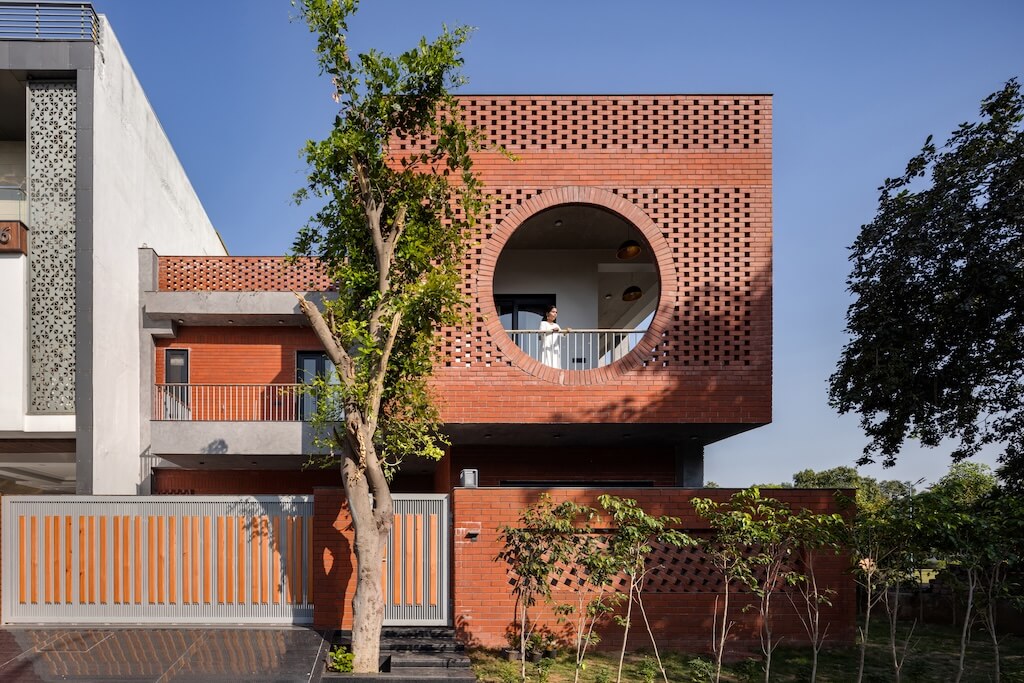
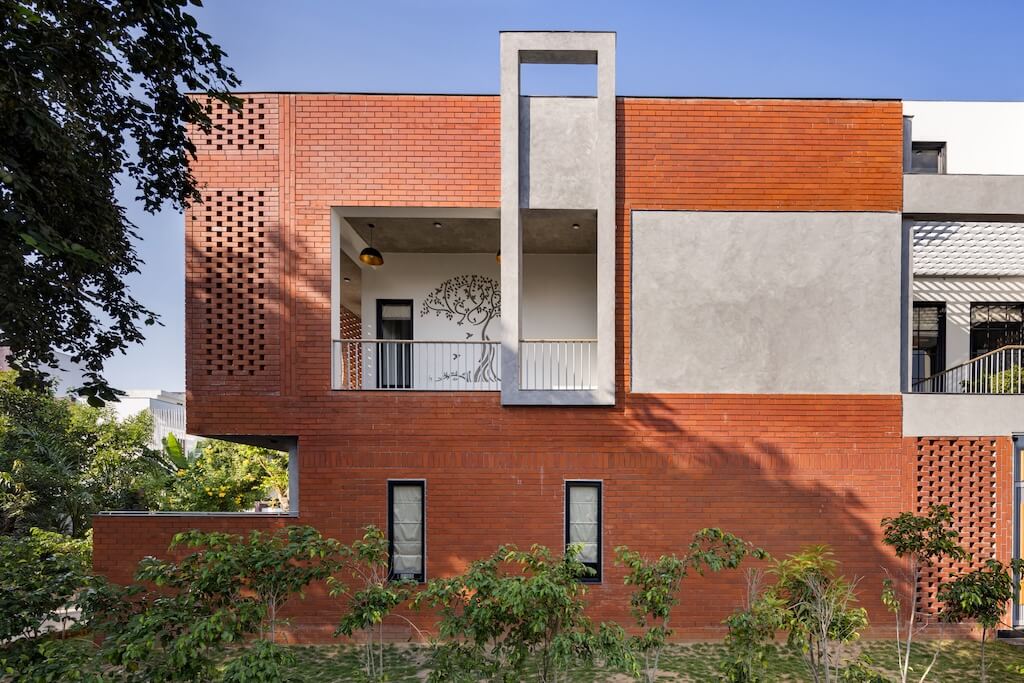
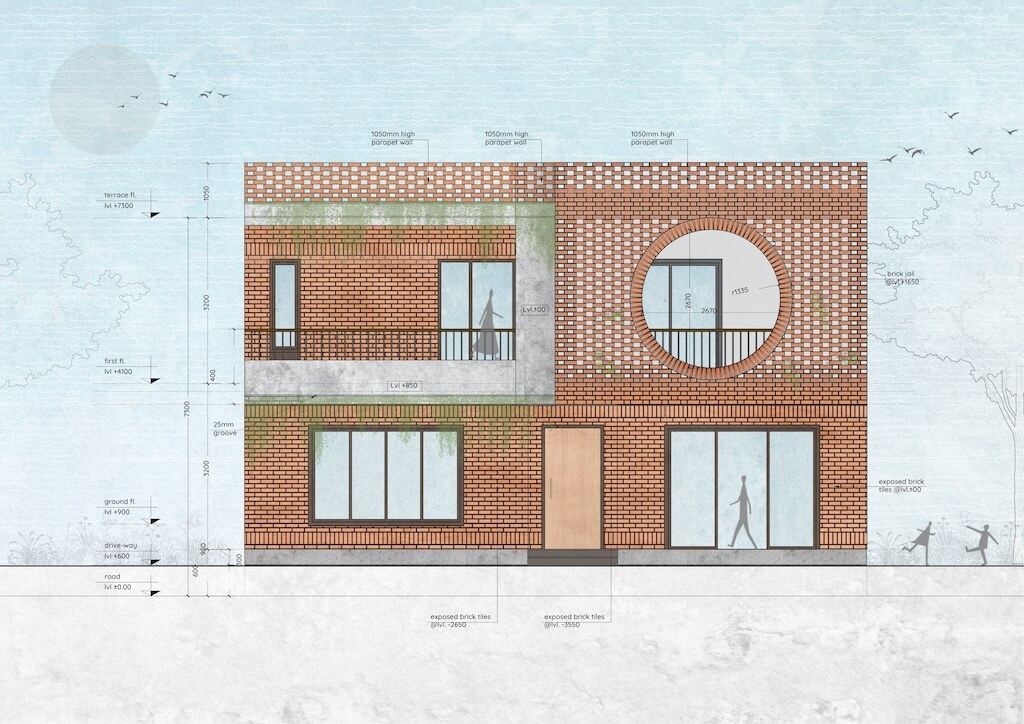
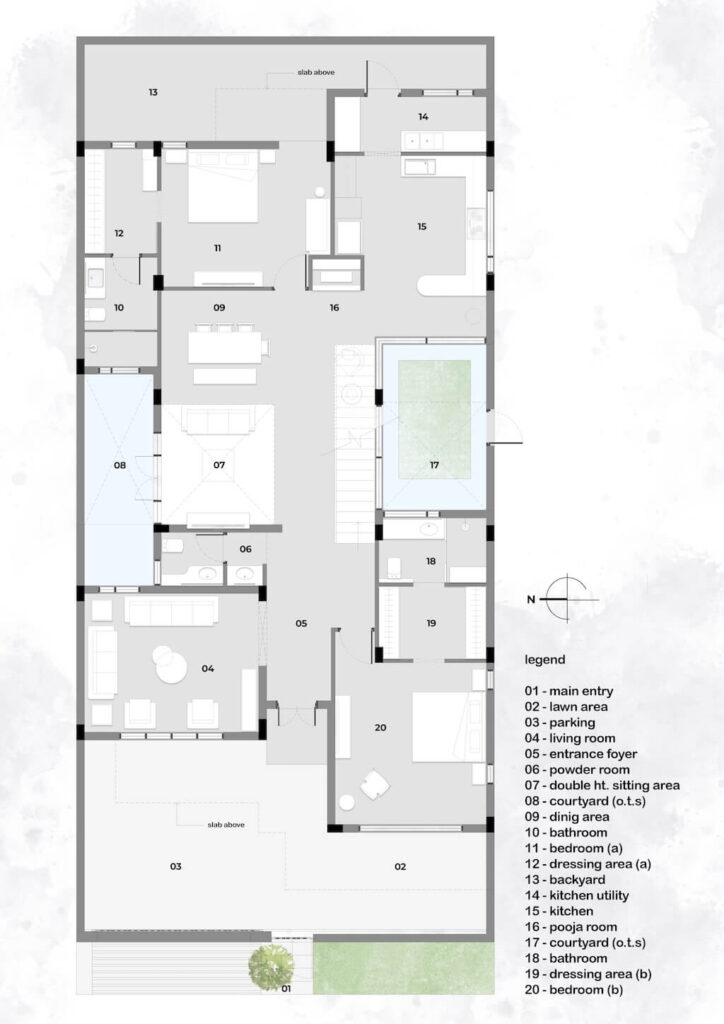
The residence is aligned along a west-east axis, featuring the main facade facing the street to the west and the back elevation opening to the east. On the northern and southern sides, portions of the structure are carefully taken away to create openings that allow natural light to penetrate deeply into the layout. The western front is protected by the jaali screen, transforming the most challenging elevation into the most architecturally refined.
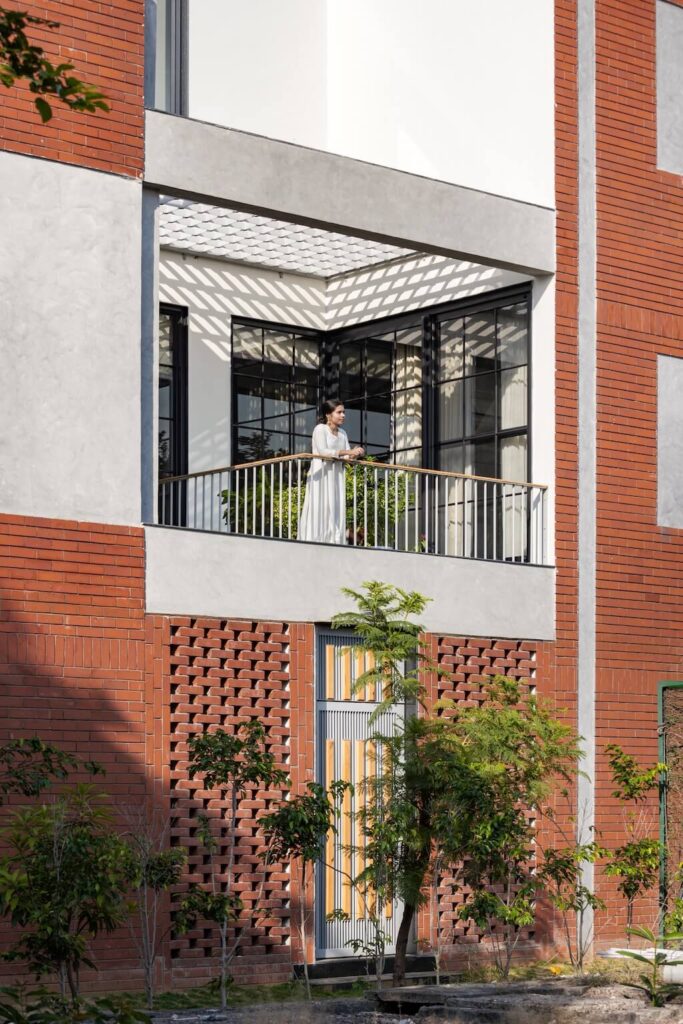
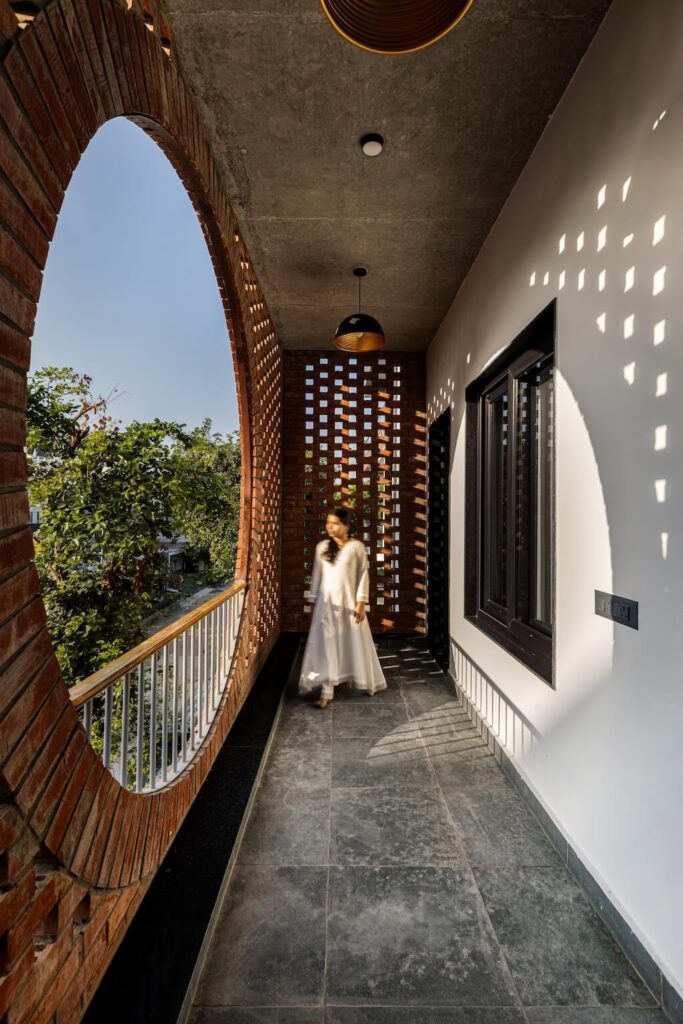
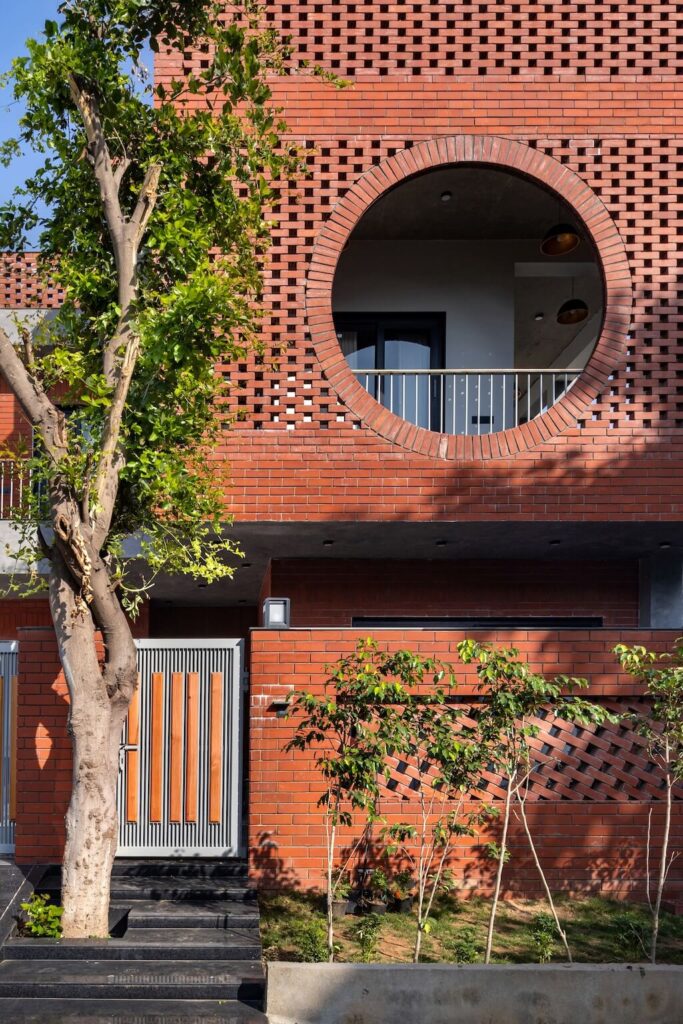
The western facade presents the architecture’s most deliberate statement. The upper volume appears as a striking protruding brick form, with its whole exterior interlaced with a diagonal jaali screen, a matrix of tiny square openings that transforms solidity into a living layer of light and shadow. Located within this permeable area, a substantial circular opening outlines the extending balcony, its concentric layers of brick extending outward to create a tight, assured opening. The circle functions as a shading element and a framing component, while also encompassing an urban purpose. The circular opening reflects the ‘eyes on the street’ idea, creating an intentional visual link between the private space and the public area beneath.
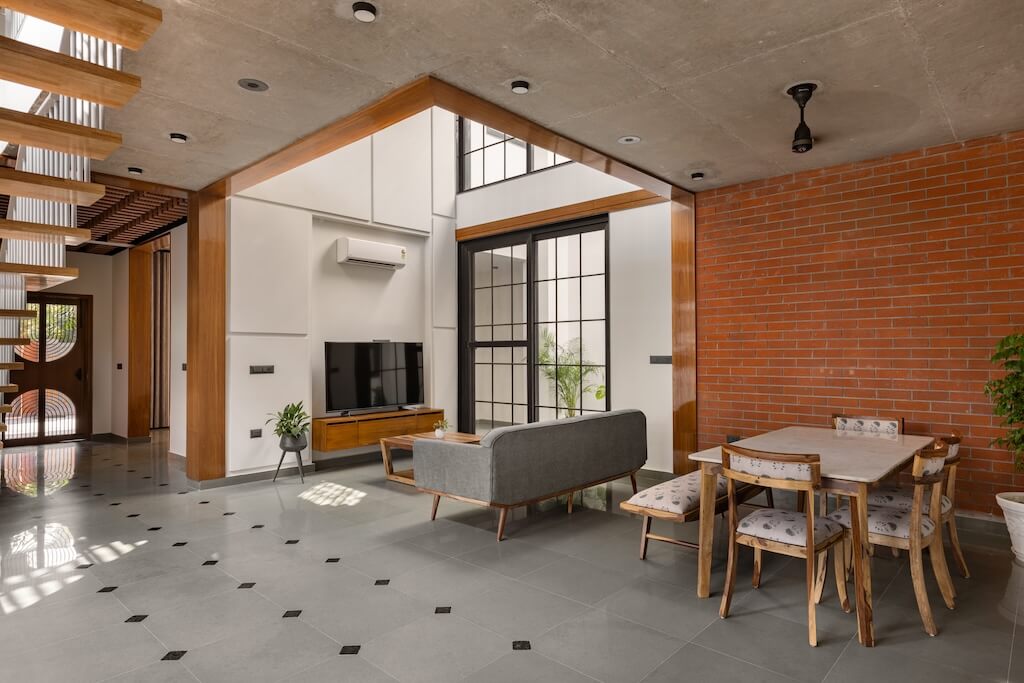
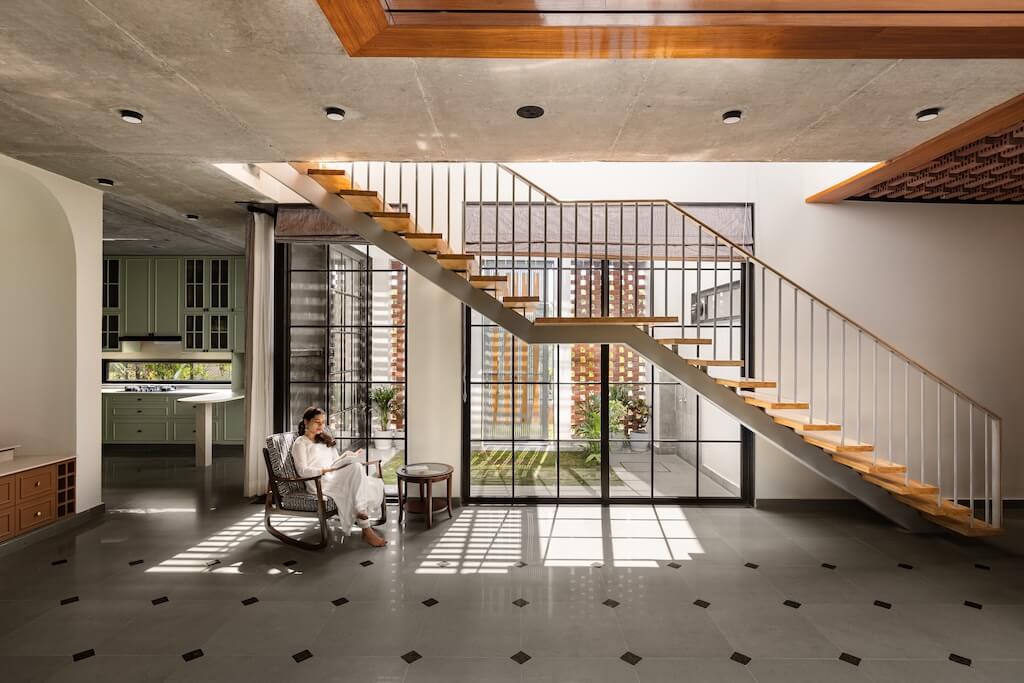
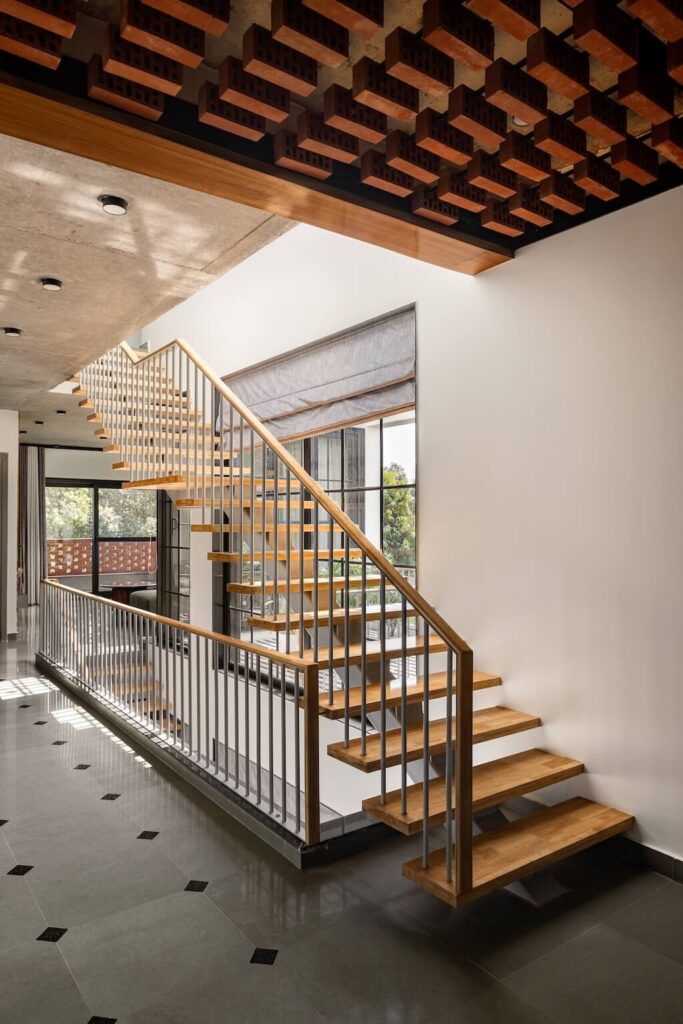
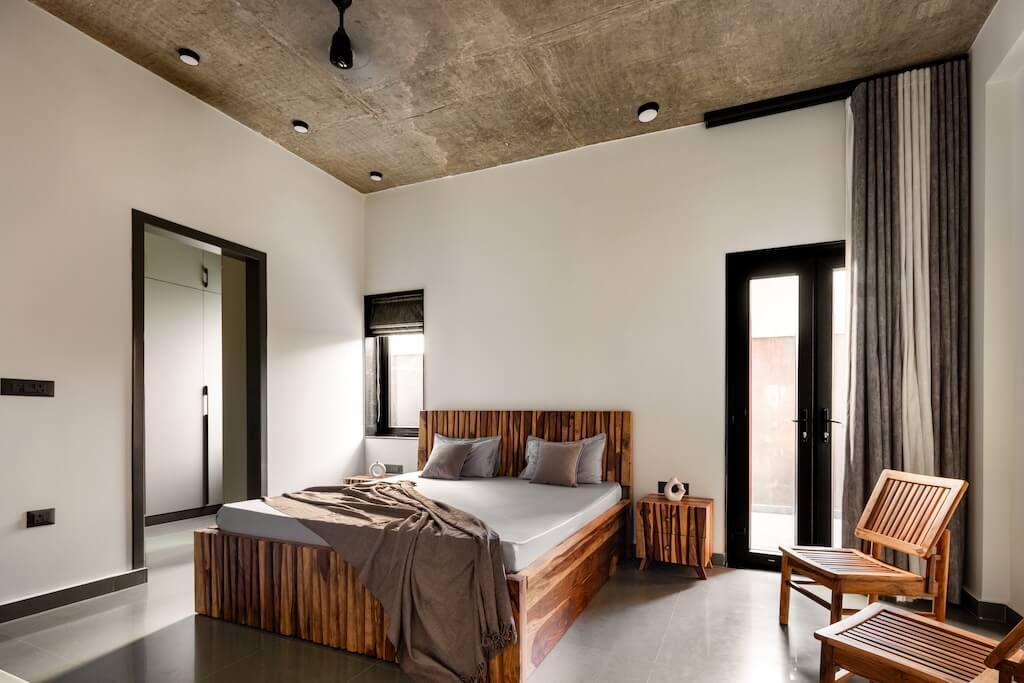
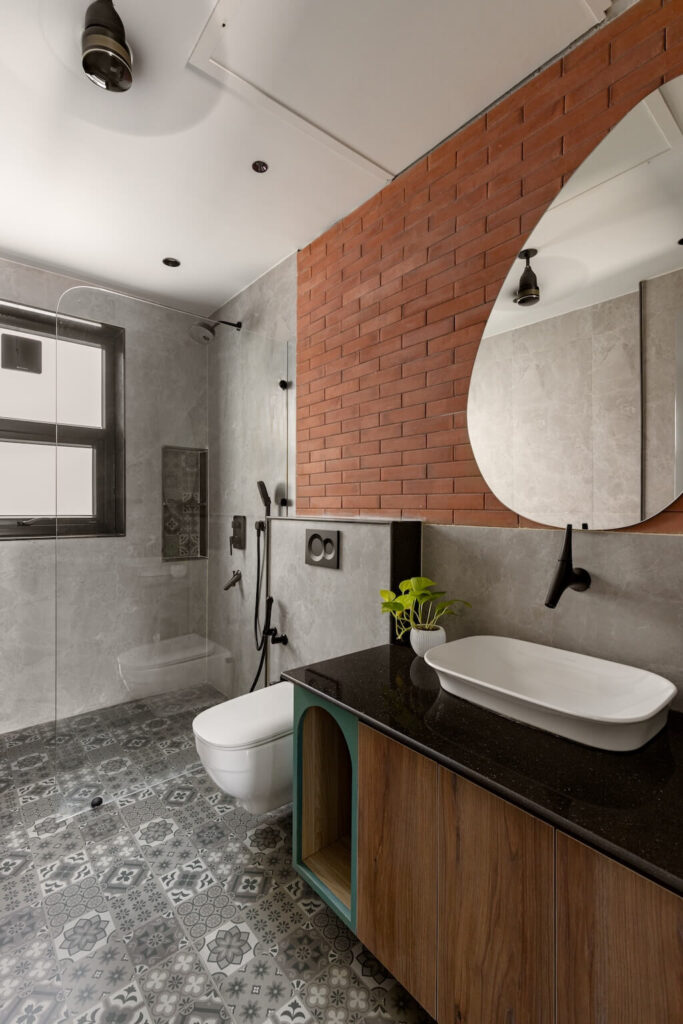
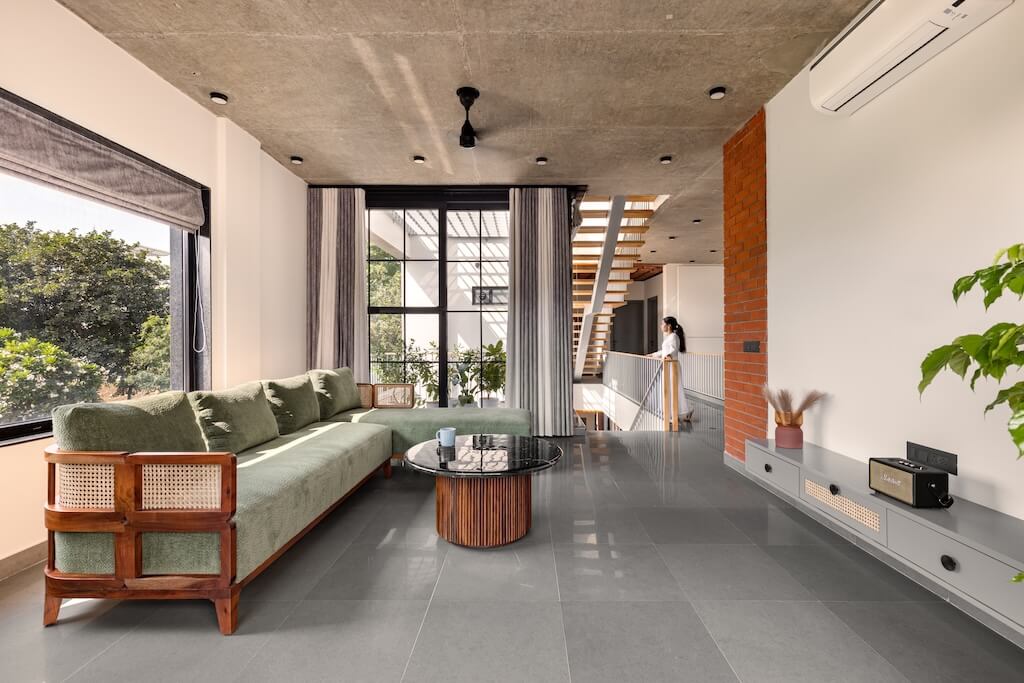
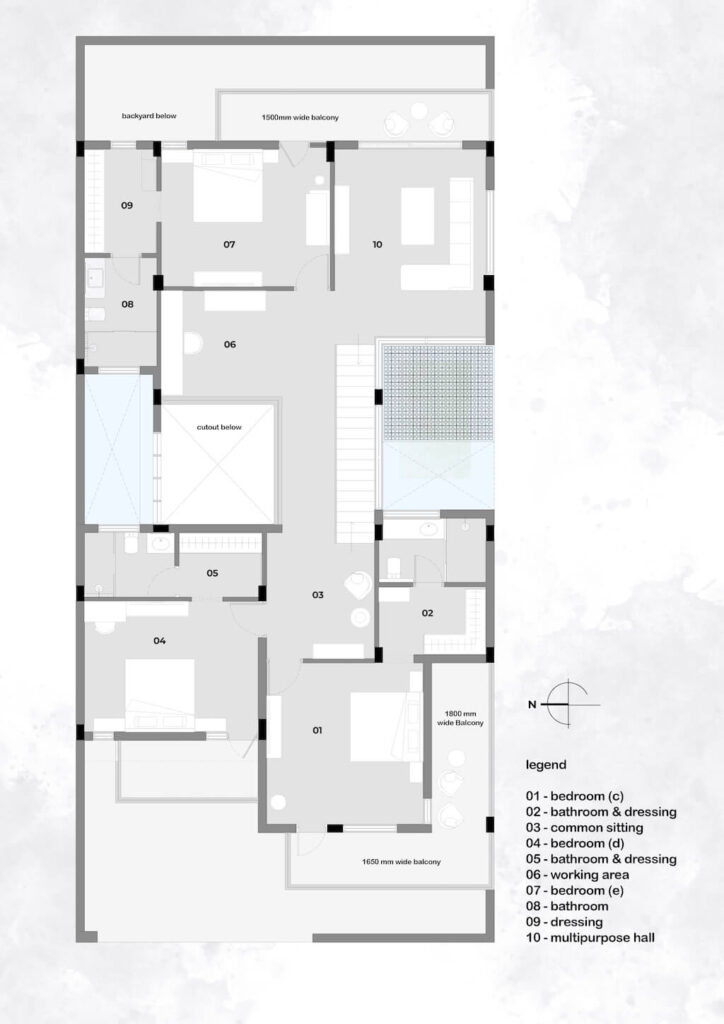
Occupying 5,200 square feet, the layout shifts from the entrance to the interior with careful intention. A living room leads into a sunken sitting area with double-height ceilings, directing attention to the central courtyard outside. That courtyard serves as the spatial center of the home, acting as an environmental shield, a social pivot, and a source of light, linking the living, dining, and kitchen areas on the ground floor while providing a visual connection to the upper level. The kitchen is thoughtfully crafted for practicality, located to cater to both the dining space and the courtyard periphery while maintaining the airy openness of the communal area. Ground-level bedrooms are intertwined with communal life due to their closeness to the courtyard. On the upper floor, three bedrooms, a kids’ room featuring a workstation, and a versatile hall reinforce the home’s focus on interconnected, multi-dimensional living.
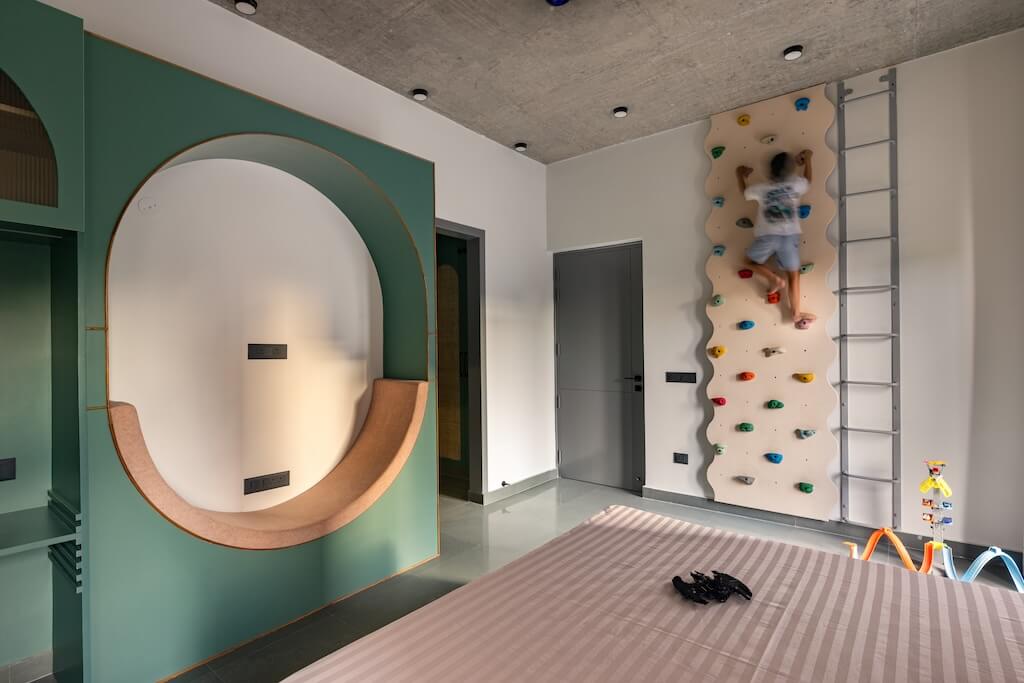
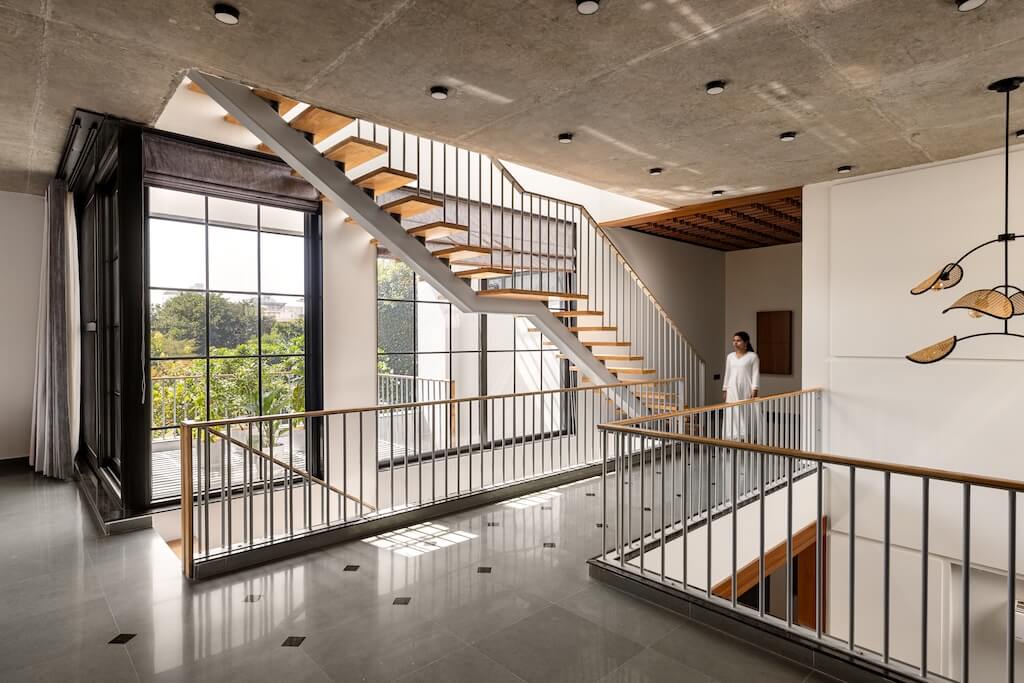
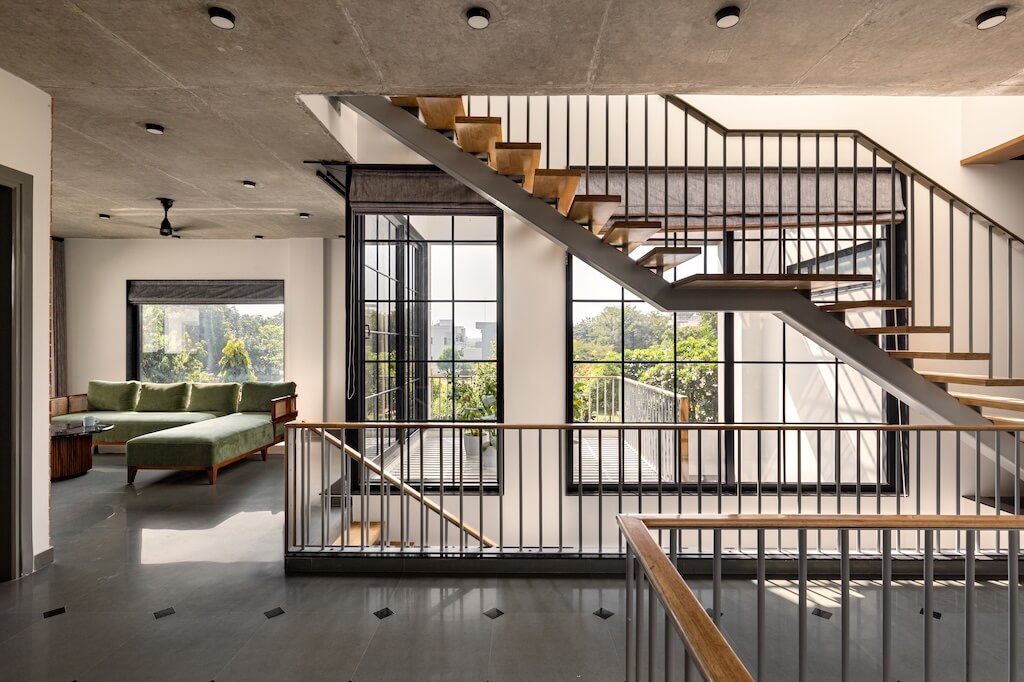
The interiors reflect brutalist influence, appreciating the beauty in structural honesty instead of hiding it. Uncovered concrete slabs retain the marks of formwork, subtly recounting the story of their creation. Unfinished surfaces are allowed to express themselves without refinement or excuses. An internal brick pergola scatters incoming light into changing patterns on the floor, while the Kota stone beneath creates a cohesive palette with its matte serenity. Geometric inlays delineate circulation and define areas without the use of walls. The structure and finish remain identical here, reflecting a design philosophy where the construction process serves as the aesthetic expression.
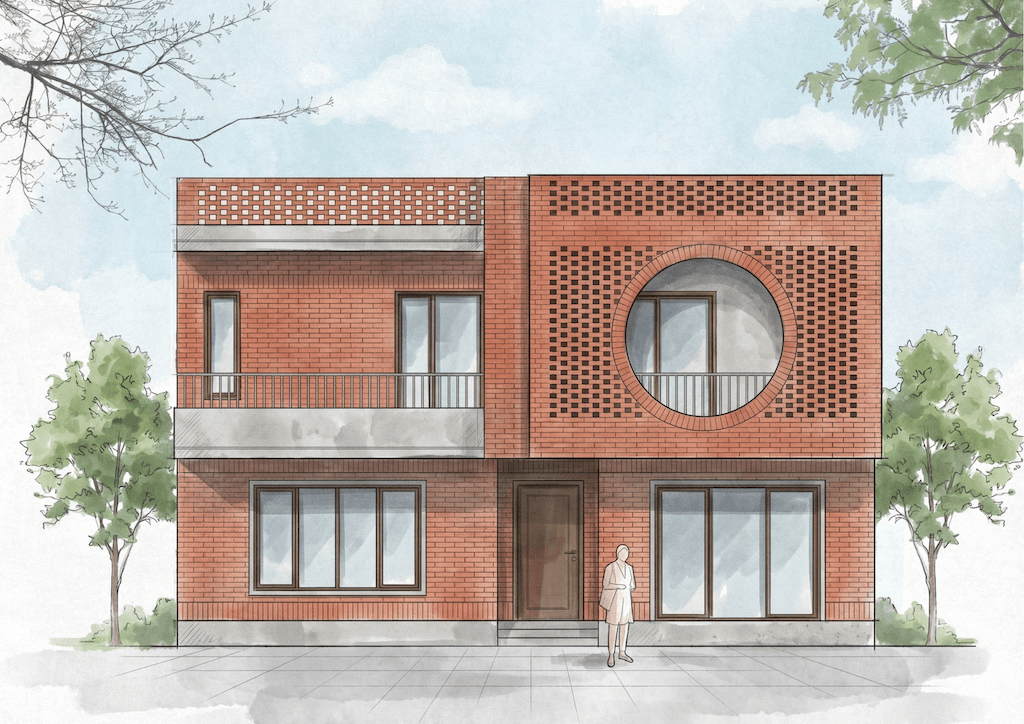
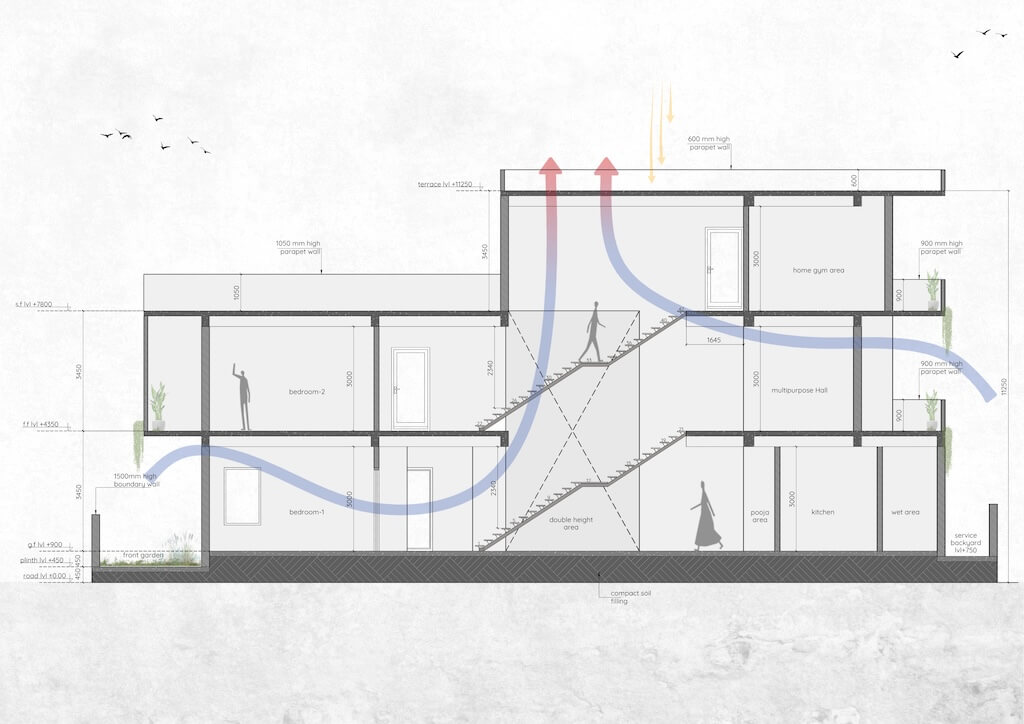
Soft morning light seeps gently into the courtyard. By the afternoon, jaali screens and double-height openings moderate the western heat into a more bearable condition. Open-to-sky spaces allow for a natural ventilation cycle, decreasing dependence on mechanical cooling systems. The house conveys its reaction to climate not via formal innovation but through material awareness and spatial transparency. The Red Brick House does not oppose climate but instead embraces it. Grounded in local materials and influenced by everyday rhythms, it provides shade, illumination, and tranquility with serene clarity, creating a lasting architecture rather than mere spectacle.
Architects: Aura Architecture Studio
Area: 5000 sqft – 10,000 sqft
Year: 2025
Location: Rohtak
Principal Architect: Ar. Tawish Tayal
People and Business Manager: Divya Garg
Project Lead: Ar. Nitya Prakash, Ar. Sejal Awasty
Photographs: Purnesh Dev Nikhanj
Design Team: Ar. Nitya Prakash, Ar. Sejal Awasty, Ar. Paramhansh Yadav, Mohd. Mohsin, Vinita Gusain, Rahul Kushwah
Editorial & Content Strategy: Ar. Parthiv Verma
Visual Communication & Graphics: Ar. Parthiv Verma
