
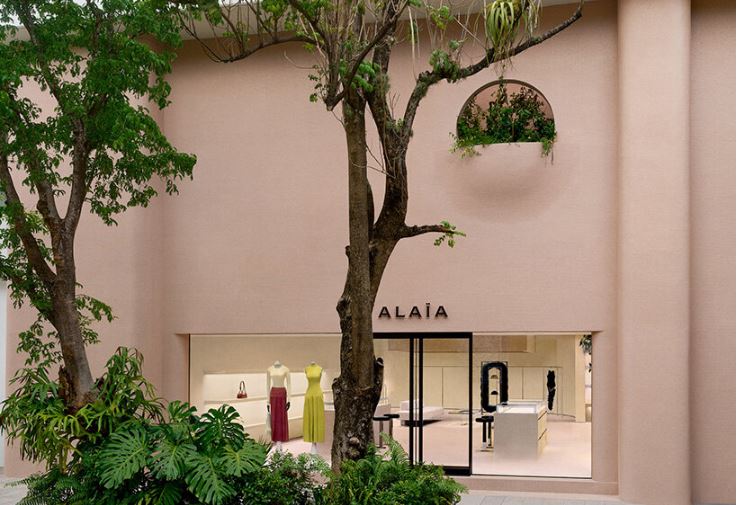
Alaïa continues its long-standing partnership with Swedish architecture firm Halleroed by opening its first shop in Miami’s Design District. The shop, which is located in one of the most fashion-forward areas of the city, also pays homage to Miami’s Art Deco heritage, creating a more tactile architectural identity.
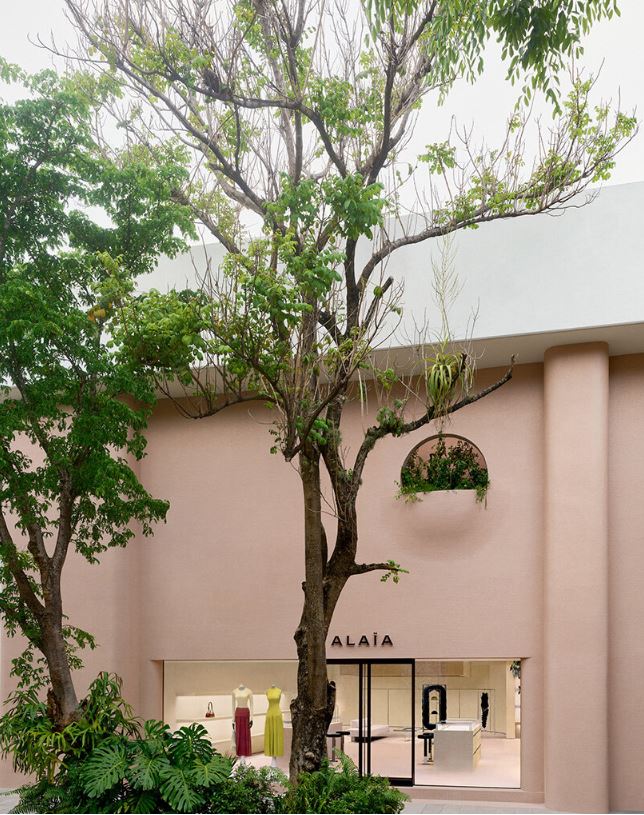
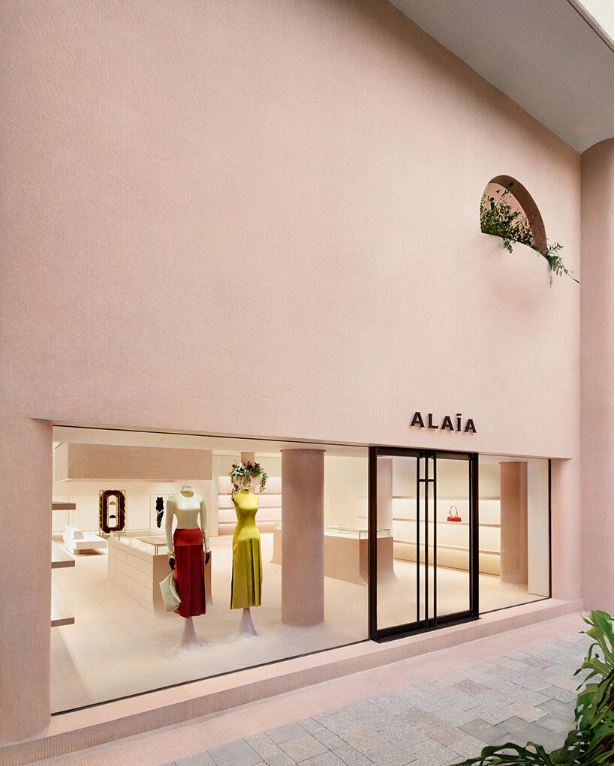
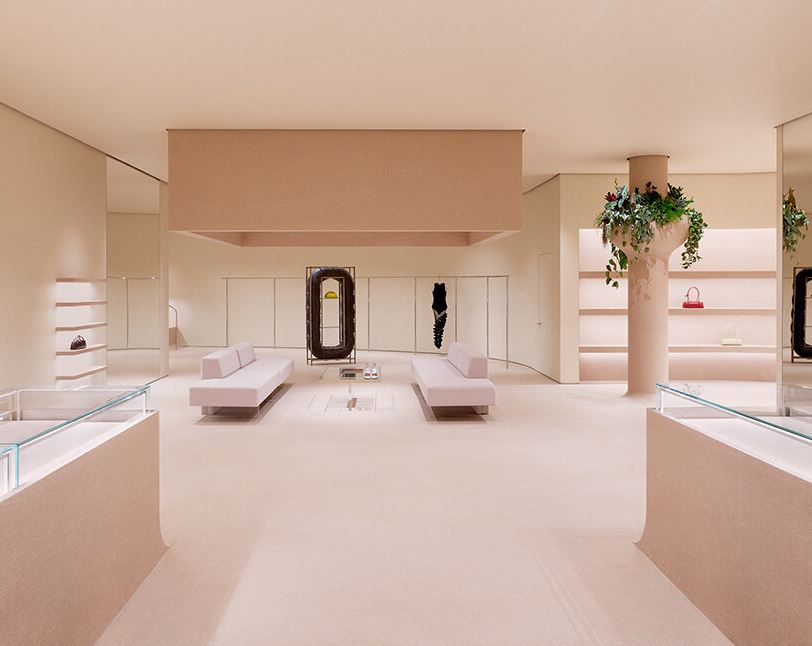
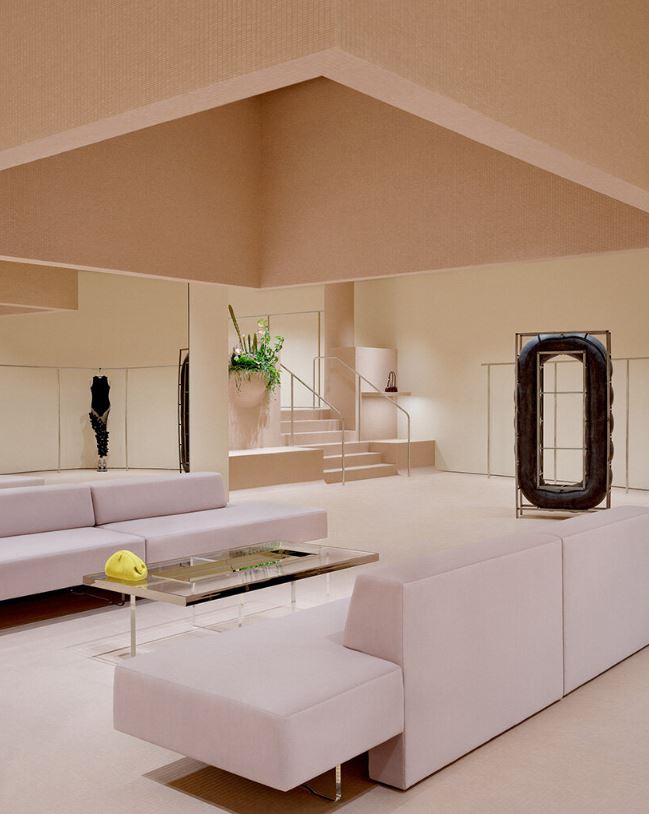
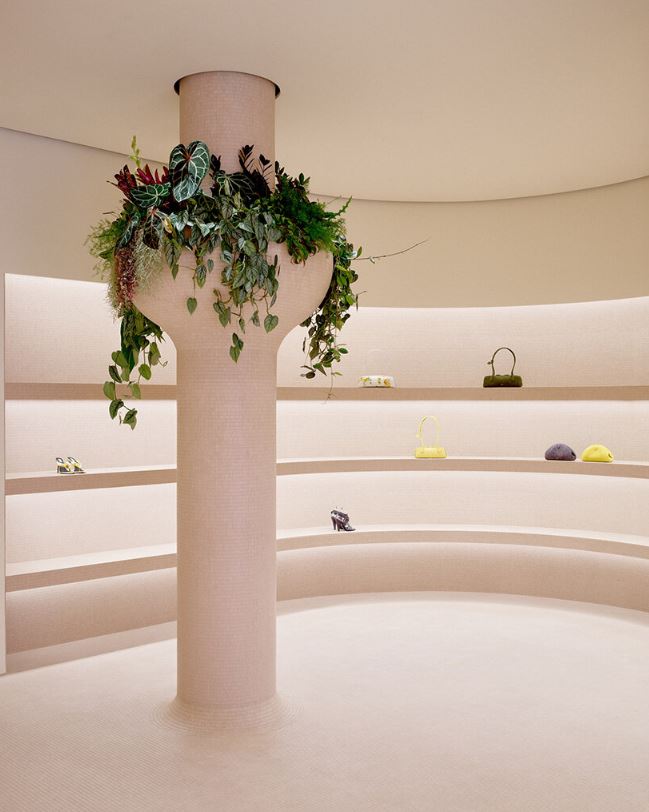
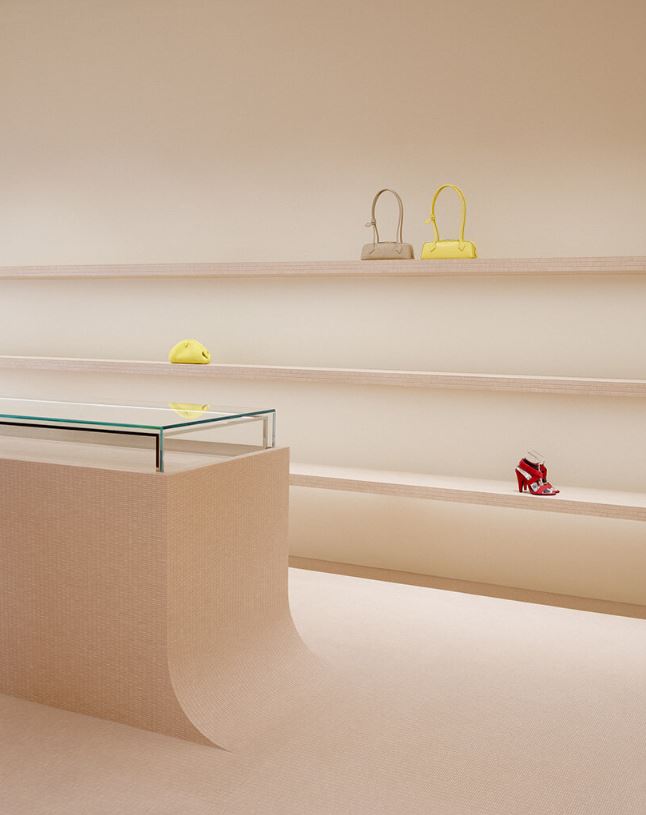
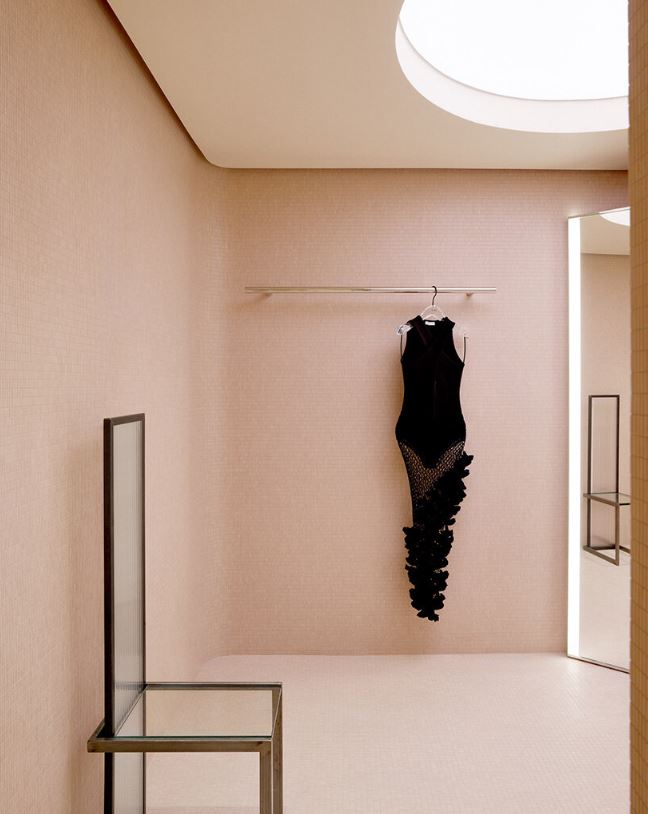
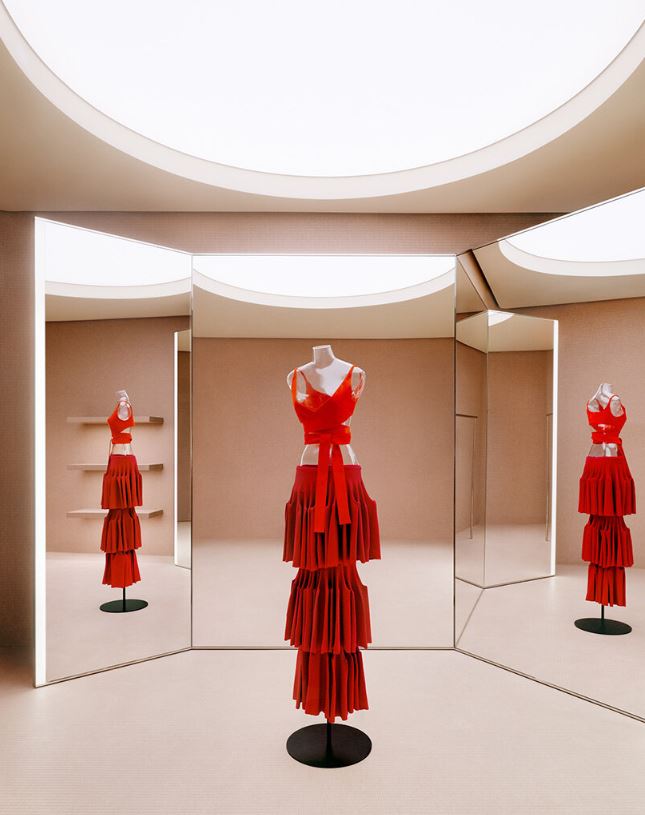
Nearly every surface is defined by pink mosaic tiles, which provide a continuous skin across the walls, floors, facade, and custom furniture. The material is used by Halleroed to connect interior design and architecture, enabling rounded volumes and curved shapes to appear from a single surface. The boutique has the feel of an inhabitable installation thanks to the mosaic in the middle of the ground floor that seems to peel away from the ceiling before dropping into a suspended lantern that anchors the lounge below.
The pink mosaic exterior is punctured by a circular hole that frames an organically shaped planter created by French botanist Patrick Blanc. Blanc, who is renowned for creating the first vertical gardens, has worked with Alaïa for many years, from the artificial river built for Azzedine Alaïa’s apartment to the living wall of the maison’s Paris flagship. Climbing plants are included into Miami architecture to soften the structure.
The Swedish team at Halleroed created the retail experience in a number of different settings. The upper floor, which is used for ready-to-wear, has a cosier ambiance, while the circular rooms devoted to shoes mirror the building’s recurrent shape. By multiplying reflections and viewpoints, folding mirrored screens allow light to enlarge the comparatively small areas.
Visitors are drawn through nearly every room by the pink mosaic. Darker materials then start to show up. Glass reflects pink flashes back into the room, brushed metal captures light, and black leather softens the sitting. Each space has its own rhythm thanks to the small adjustment that doesn’t disrupt the flow.
Furniture becomes part of the architecture
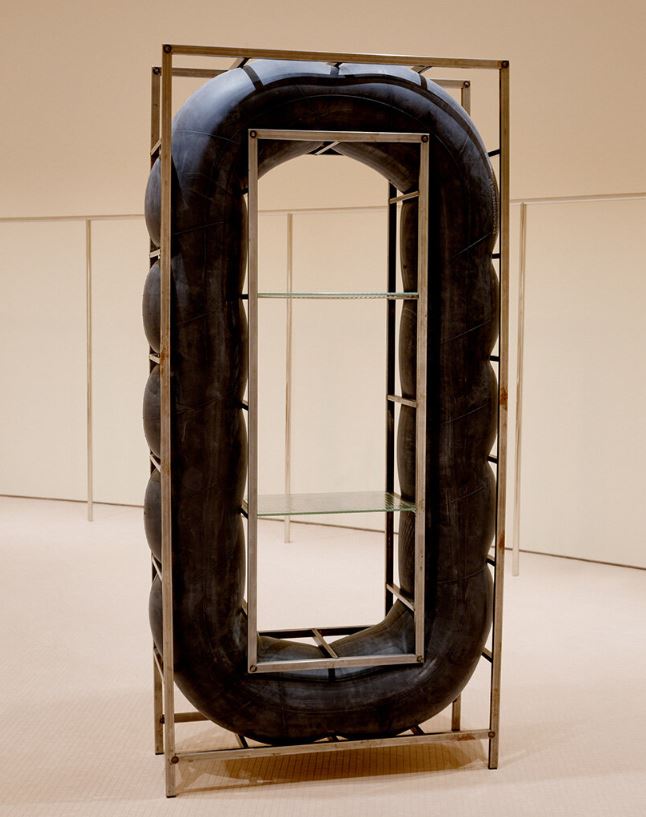
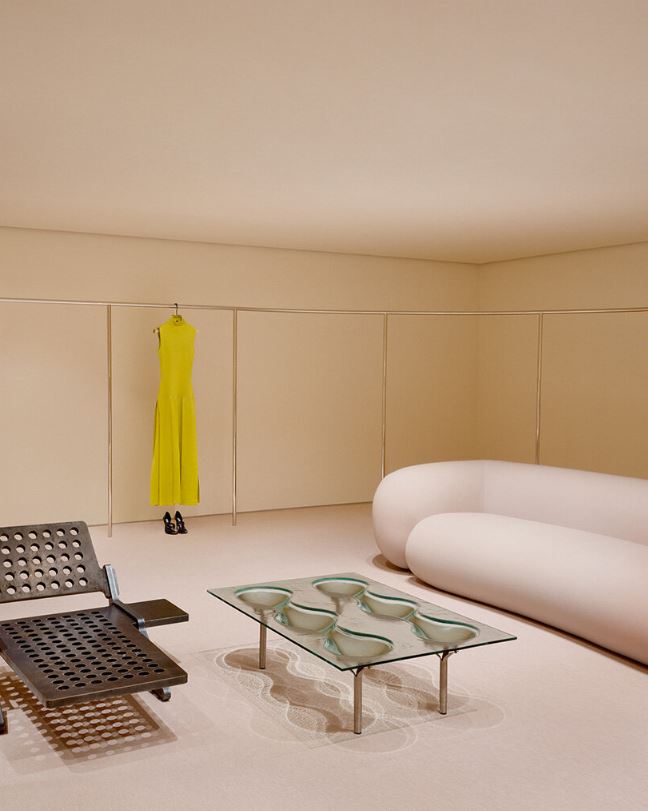
The furniture feels like another layer of the architecture. Martin Brûlé has assembled a collection that brings together rare twentieth-century pieces with contemporary designs, allowing different generations to share the same room. Reinhard Müller’s Chambre à Air shelving stands near François Arnal’s Formule 1 lounge chair, while Vladimir Kagan’s sofas meet Brûlé’s own sculptural tables.
Elsewhere, Philippe Starck, Ron Arad, Tom Dixon, Philippe Malouin, and Gerard Kuijpers each make an appearance. The pieces seem to acknowledge one another through their rounded forms, unexpected silhouettes, and shared sense of sculpture.
The same shapes and materials keep reappearing, making one room feel connected to the next. The mosaic continues onto the facade, plants climb through the circular opening, furniture echoes the curves of the walls, and the clothes become one more layer within the space.
project: Alaïa Miami Design District Boutique
architect: Halleroed | @halleroed
fashion house: Alaïa | @maisonalaia
location: Miami Design District, Miami, Florida, USA
landscape design: Patrick Blanc
furniture curation: Martin Brûlé Studio | @martinbrulestudio
