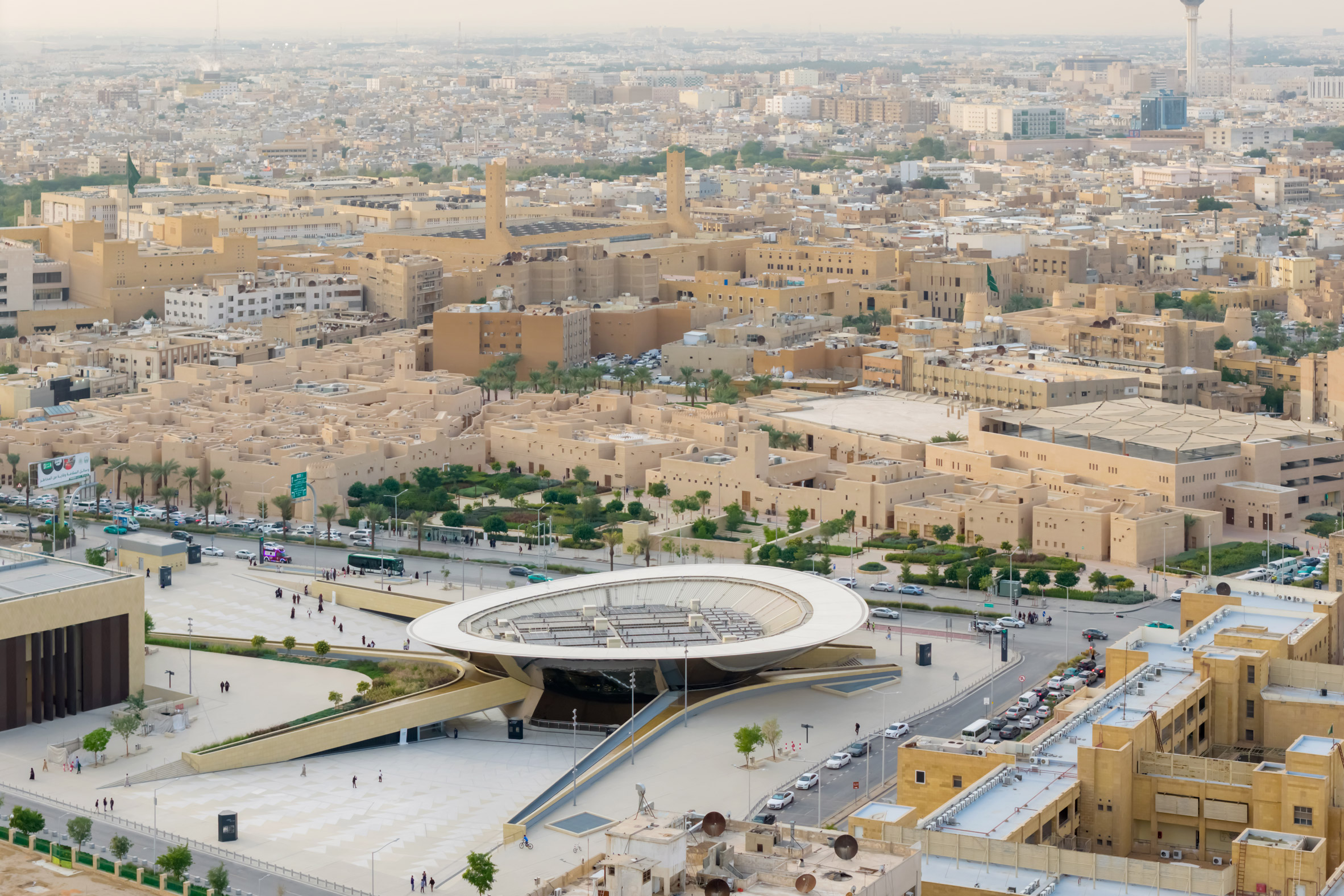
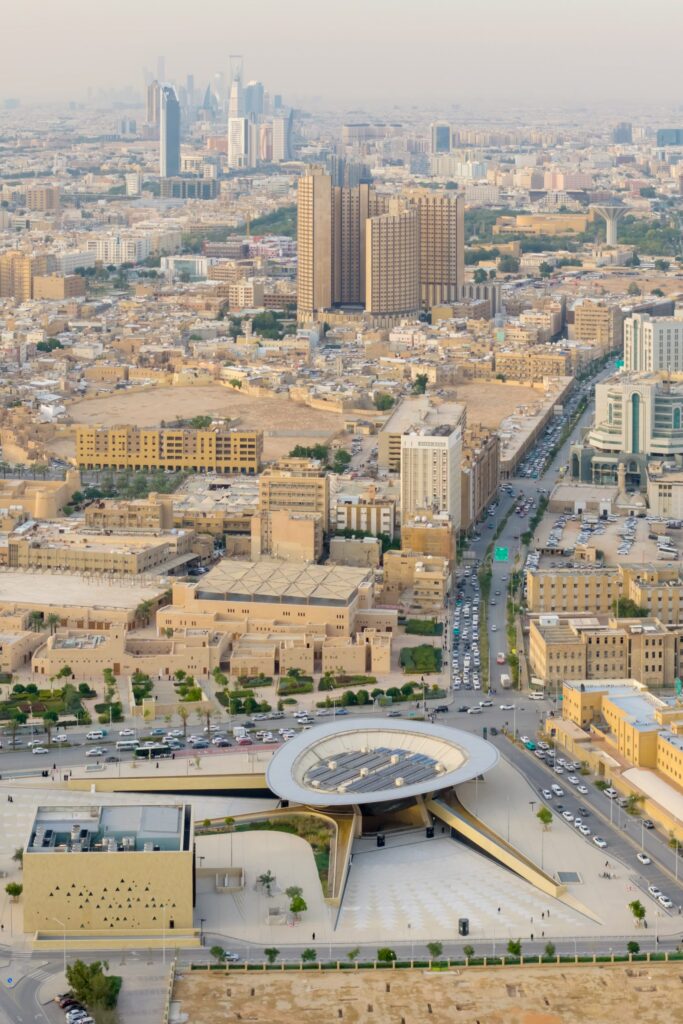
Snøhetta’s design for the Qasr AlHokm metro station in Riyadh adds a shaded underground garden and a large reflective canopy to the city’s historic core. The station, which connects two major lines and serves as an open urban plaza within walking distance of the Al Daho area and the old royal grounds, is one of the four main centers of the new network.
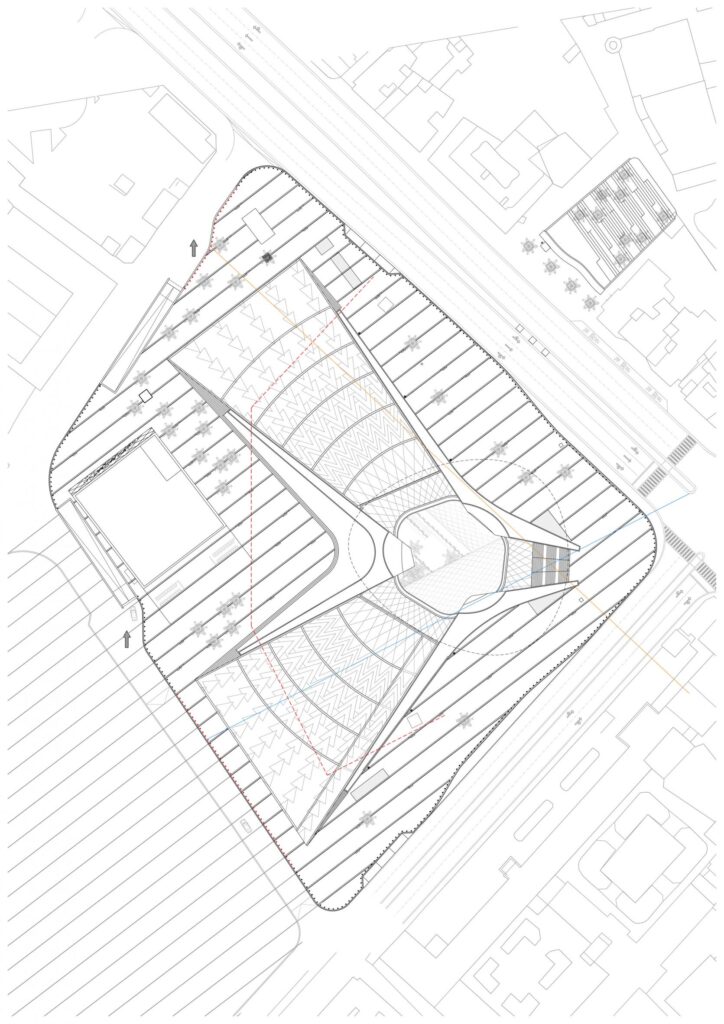
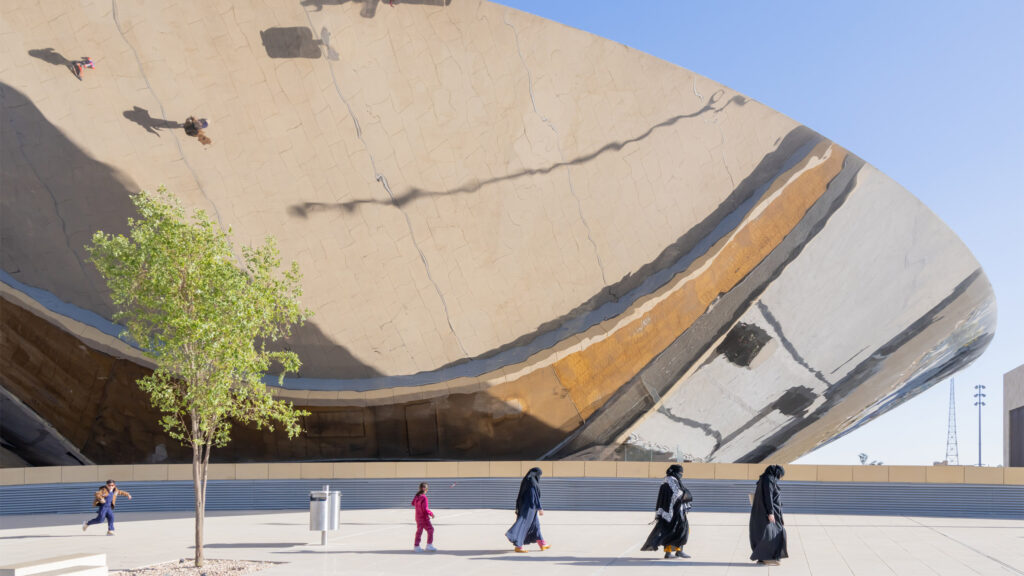
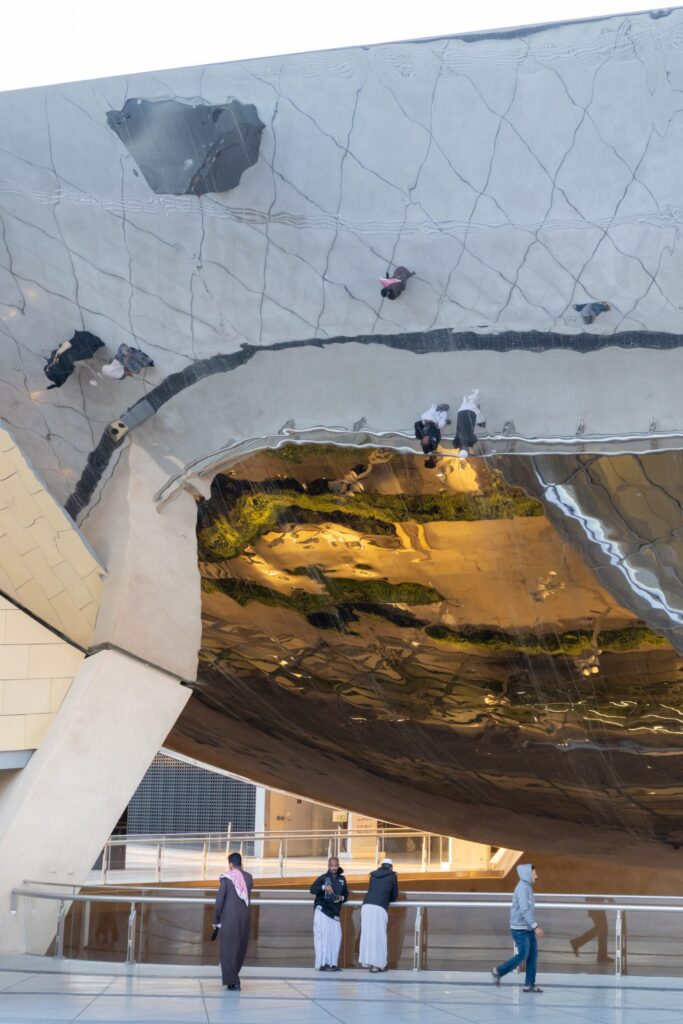
A 360-degree stainless steel canopy with a mirror-finished underside looms over the main entrance from the plaza. As it casts shade on the terrazzo level below, the structure functions as an urban periscope, bringing the city into its surface. The gesture makes the metro station a hub for arrivals and gatherings in the heart of Riyadh, serving as both civic space and infrastructure.
The station is located next to a significant Eid prayer area that can hold thousands of worshipers. The metro entrance and the rebuilt mosque have a single, cohesive surface thanks to the terrazzo plaza’s extension to the site’s boundaries. In this manner, during big events, the area serves as an outdoor extension of the mosque.
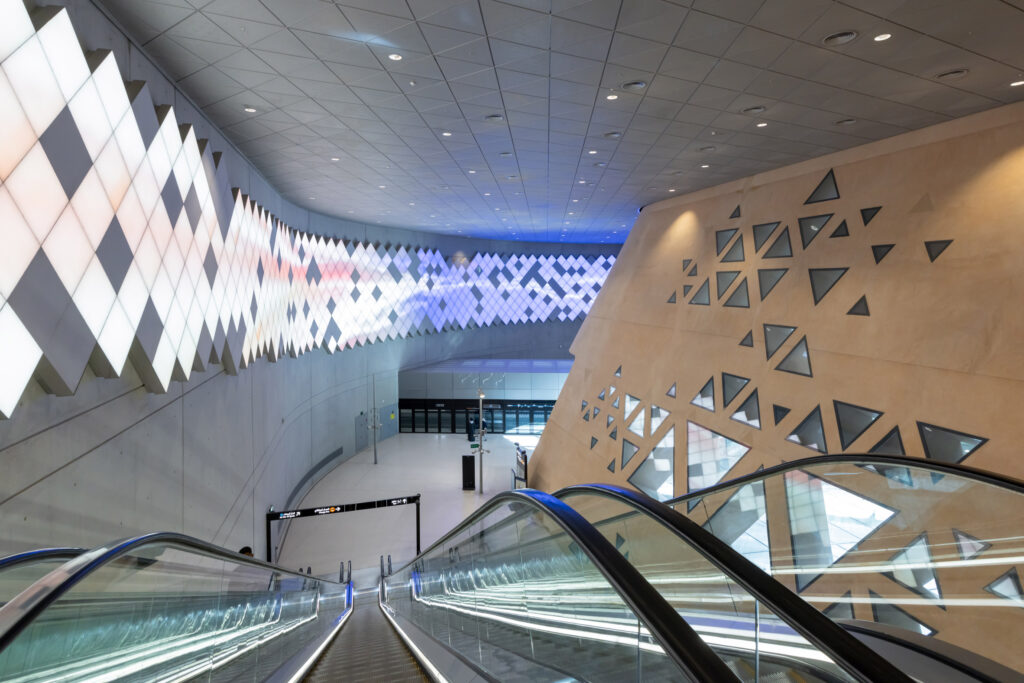
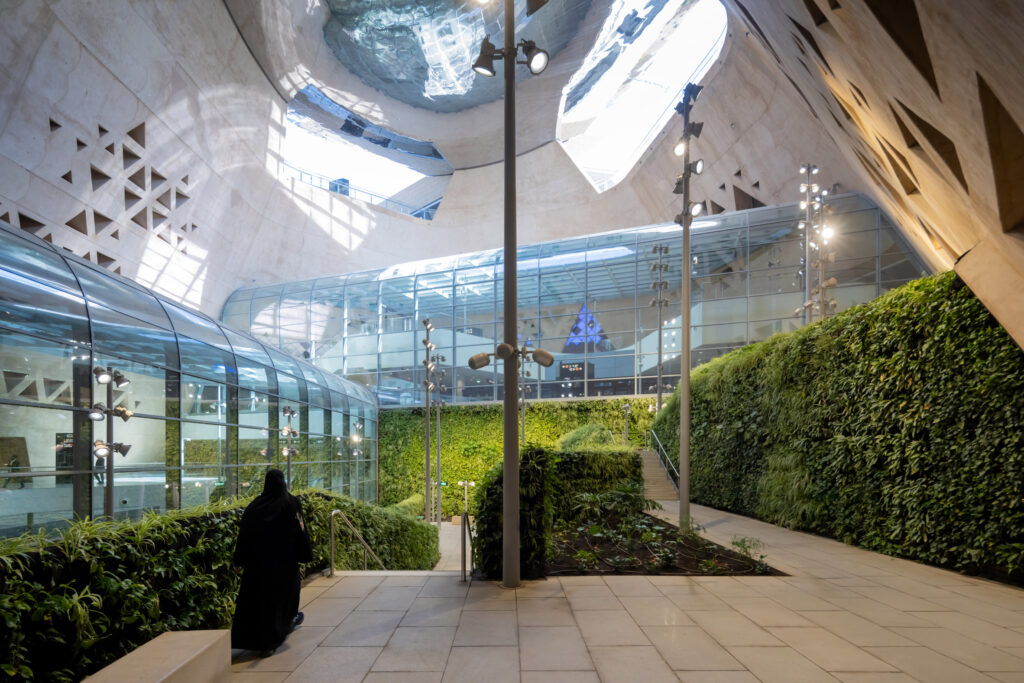
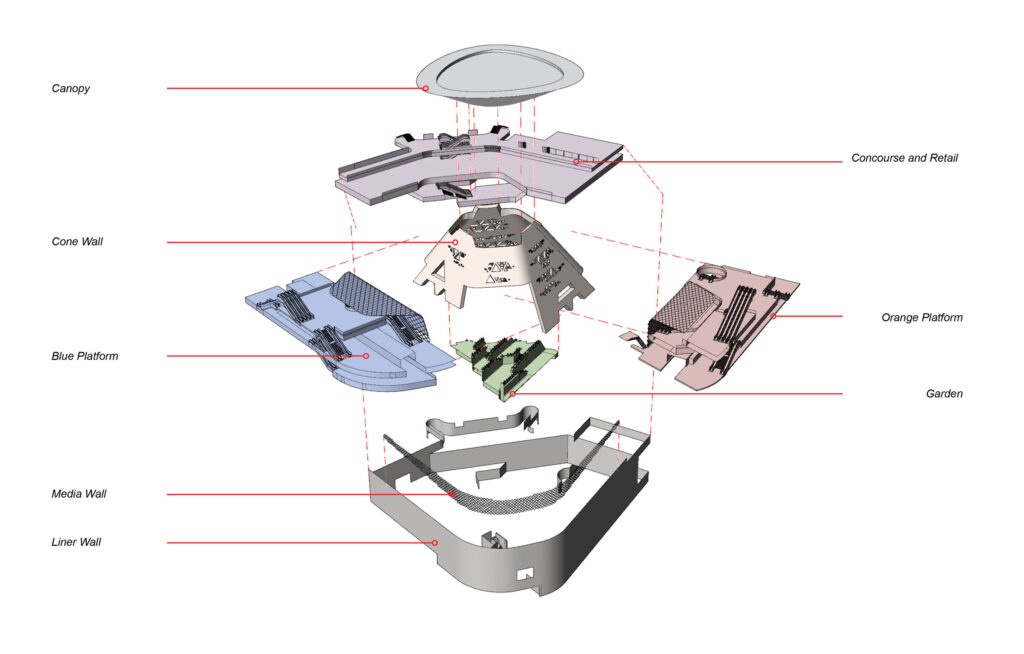
The inner walls of the atrium are punctured by Najdi-inspired patterned apertures. The apertures, which filter light and produce controlled visual links between floors, are made up of hundreds of triangular carvings in different sizes. A media wall that spans over 100 meters and includes video, lighting, and acoustic panels is located outside the concrete cone.
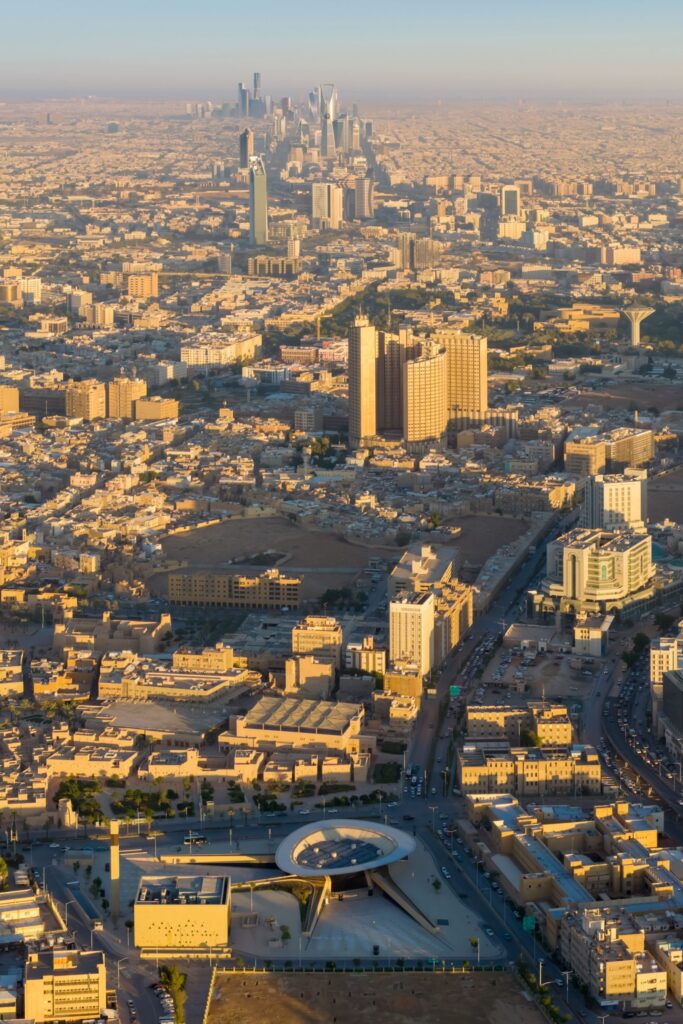
A mirrored bowl-shaped canopy that stretches across the plaza and dips inside the station is its distinguishing feature. It reflects views of both the interior of the building and its environs. The plaza’s sloping floors lead guests beneath the canopy and into the station, which has two metro lines and an underground garden surrounded by a wall that resembles a truncated cone.
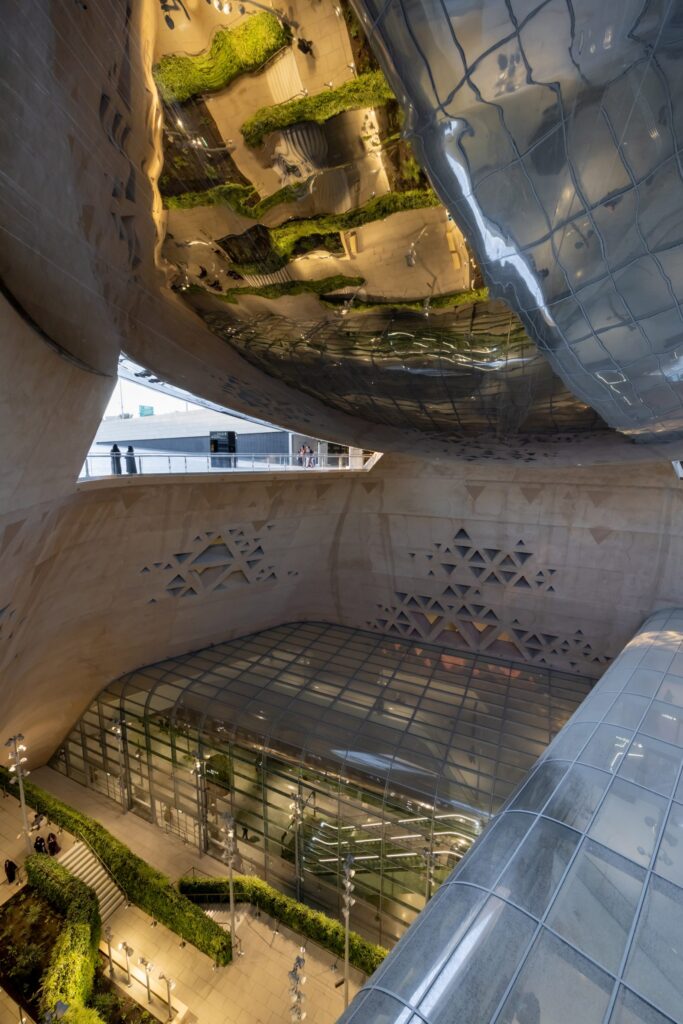
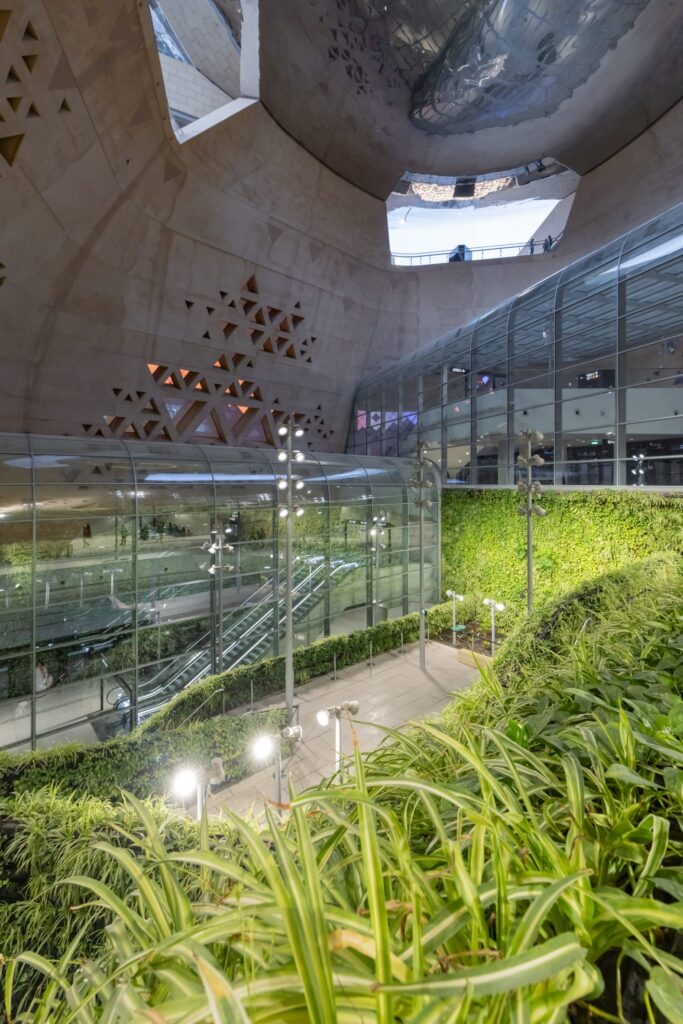
Green walls and plants create a garden area inside this cone wall in the atrium, which is intended to be a tranquil spot for travelers to unwind in while they wait for their train.
The garden is irrigated by water collection systems in the plaza and canopy roof, and its underground placement contributes to the garden’s mild climate.